Neighborhood Kids & Authentic Freedom

Our next door neighbors are preparing to move after living on this street for decades. Their daughter is here to help her parents sort through and pack up their things. Her sons, ages 4 and 8, are here too. They play on our swings, visit our chickens, sometimes borrow a riding toy from our garage. I am utterly charmed by these gentlemen. (Okay, I am charmed by nearly every child I meet.)

The other day they were out with squirt guns and after a particularly fierce battle clambered up to my porch. My kids and I used to enjoy making up stories together, so I gave it a go. “If each of your squirt guns could have a magical power,” I asked, “what would you like it to be?” One of them said, “To make things bigger or smaller!” The other said, “To make things real!” So we launched into a collaborative story about the crayon drawing of a giraffe that, when squirted, lifted off the page to become a real giraffe. We went back and forth making up adventures for this giraffe and his boy companions, until it was suggested the police were out to arrest the animal for chomping on neighborhood trees and pooping in the park. The fictional boys and their giraffe friend raced home to avoid getting in trouble, but the giraffe couldn’t fit through the door. Out came the other magical squirt gun to shrink it. The boys debated whether it should be reduced to the size of a dog or a rabbit or a hamster, then decided it should be even smaller so it could live with them without grown-ups noticing.

After that first story, the boys have been back nearly every day for a new story. We’ve made up stories about space travel, weird babysitters, and troublesome siblings. I’d been helping them start stories by saying, “There once were two young gentlemen who ____.” But one afternoon the four-year-old started a story with, “There once was a gentleman named Laura” and I told him if we used the word “gentleperson” that it worked for all of us. They insisted on starting all stories that way afterwards.

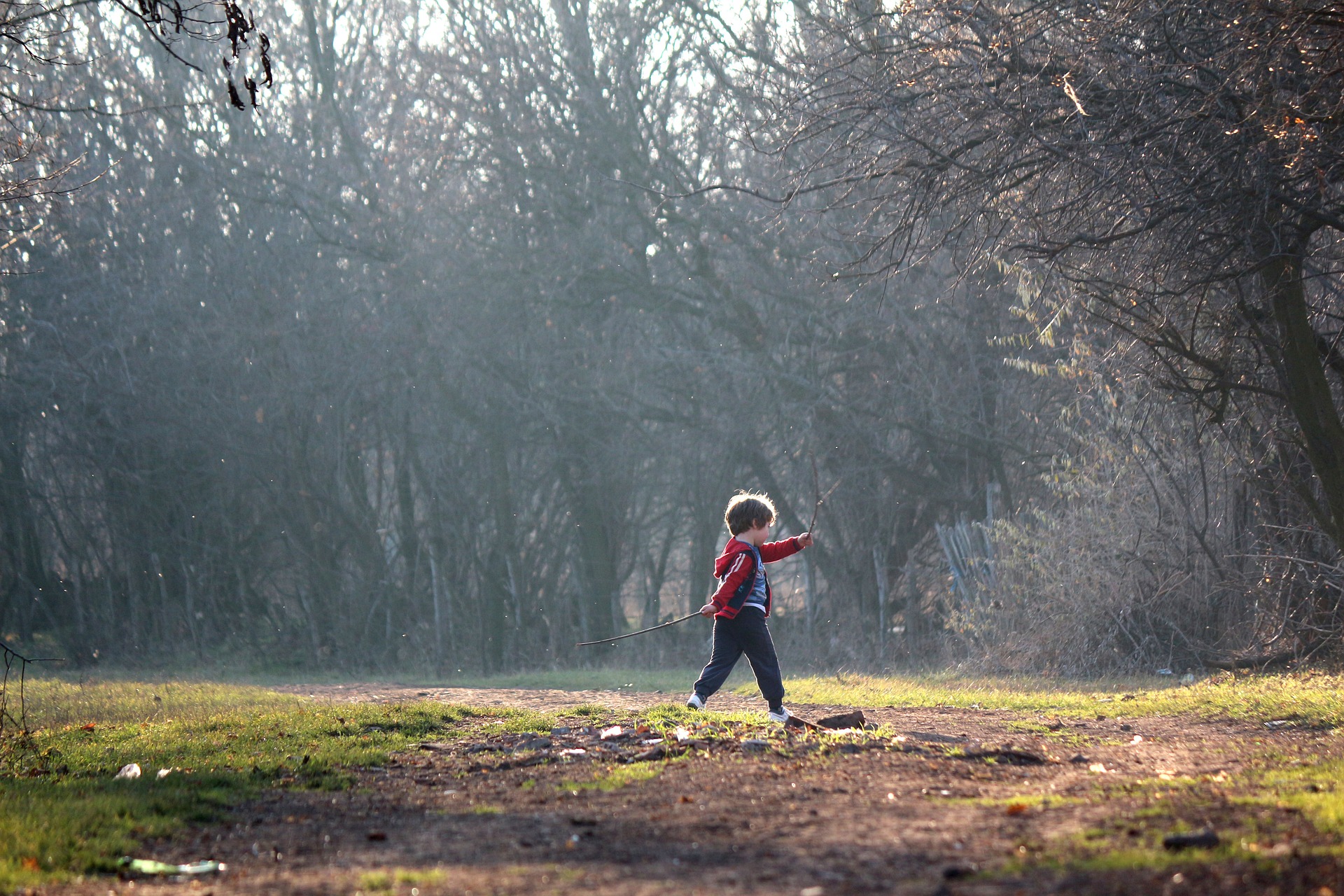
I’m grateful they are given the freedom to amuse themselves outdoors. Primary experiences outdoors, in whatever scrap of nature kids can find, is pivotal for creative mind and body-stretching play. It’s also vital to help children develop a lifelong kinship with nature.

Their freedom is increasingly rare. The range children are allowed to travel on their own is what psychologist Roger Hart has termed the “geography of children.” This range, for an eight-year-old, has shrunk from six or so city blocks a few decades ago to barely beyond the front door today. In the 1970’s, Dr. Hart spent two years conducting informal walking interviews with every child between the ages of four and 12 in one Vermont town to discover where and how they played. Kids particularly enjoyed the type of play that manipulated the physical world, making forts or using sticks and dirt to create (as one child did) a miniature airport. Dr. Hart observed that four and five-year-old children were allowed to play in the neighborhood without direct supervision, and children had the run of the town by the age of 10.

He went back to that town three decades later to see how childhood might have changed. No surprise, parents were much more involved in the moment-to-moment details of their children’s lives, resulting in much less freedom for children (and adults, presumably). As he did in interviews back in the 1970’s, he asked children to talk about secret places they liked to play. One child called out to his mother to ask if he had such a place. Dr. Hart wrote, “That would have been inconceivable 30 years ago. Then, most children I interviewed had places they went to that their parents had never been to.” Thirty years later, Dr. Hart found no children who played with sticks. This impeded freedom to play away from adult gaze has only gotten worse since. (See also The Geography of Children.)

My husband tends to be a curmudgeon about these boys hanging around. “They shouldn’t be in the garage asking me questions if they’re barefoot,” he says. “Someone could get hurt.” And he recently came across the younger boy just standing, looking over some tractor implements sitting out back. “This isn’t safe,” he said. He may have a point about safety, but his own childhood was rich with neighborhood mentors. From the time he was very small he watched and offered to help as neighbors fixed cars, repaired homes, ran small businesses. These older men let him hang around, and their influence helped him grow up to be the man he is today. (I can only remember one neighbor who let me hang around, once, yet I still see her influence in my life today.)

We now know how important these adult role models can be for children. The benefits don’t just flow one way, adult to child. Children are brimming with gifts — curiosity, enthusiasm, wit, fresh perspective, kindness, and the blessings of playfulness. If we’re open, we can re-learn from them how to bring these qualities back into our lives. They can also teach us to get past our presumptions, as these boys teach me.

Yesterday the oldest came over to chat when he saw me outside. Immediately our puppy started jumping and barking. “Why are you holding him,” he asked.

“He doesn’t understand the boundary between our yard and your grandparents’ yard, and it’s best I don’t let him follow you over.”

“It would be okay,” he said.

“It probably would,” I told him, “but when new people move in he’d have to learn anyway.”

He kicked a few stones in the driveway and I added, “Silly, really, that humans have all these imaginary boundaries — this is mine and this is yours — animals don’t recognize property lines.” This sort of observation would wash with most adults. Quite often it would lead to a conversation about something pat, like how much we can learn from animals. But it didn’t wash with him.

He came back with, “Lots of animals have territories.”

“Oh, good point,” I said, feeling an extra surge of affection for this dear young man. He is so like my own kids, well-informed and completely himself.

“I learned from a science podcast that warthogs like it when a mongoose picks it clean of insects,” he said. “Mongooses like to go back to the same warthog, sometimes they pee on their warthog to warn others away.” Of course this observation led to a fine conversation about territory marking in many species.

Thanks to this gentleperson, I ended up far more knowledgeable and hopefully less likely to make blanket statements I couldn’t defend. I also ended up wishing I had a pocket-sized giraffe living in a Lego house, just like in our story.

Healing Power Of Writing Via Zoom

I can barely lead this morning’s writing class. A sudden migraine hit only a few minutes before students began to show up on Zoom. It’s a bad one — pain and nausea plus vivid wavy lines distorting my vision. I take some restorative slow breaths, drink a glass of water, then welcome everyone to the class.

I love teaching. I’m particularly mesmerized by the way community writing classes effortlessly build connections between strangers. Over weeks of reading and discussing their writing, people can’t help but get to know one another. Ordinary conversations, even between close friends, tend to fritter time away on surface topics. But in writing class we skip weather and family updates, going directly to deeper topics. It’s entirely natural to bond after sharing universal experiences like fear, regret, grief, embarrassment, triumph, and joy. I suspect we carry one another’s poems and stories with us long after the class is over. I certainly do. Many friendships built in writing class persist and several former classes of mine continue to meet independently as writing groups. Writing together has a magic all its own. 

But this morning I am in trouble. I can’t easily focus on the screen and can barely see my notes. Worst of all, I have trouble explaining concepts due to migraine-imposed brain fog, In this session I introduce persona poems. I explain, falteringly, how persona poems free us to write from the perspective of a soup bowl, a tree, an astronomer, a virus. I point out persona poems can help to stretch us. After all, if we’re writing in the voice of a dolphin or the voice of Donald Trump, we are writing our way toward understanding those lives more completely. I note that some people insist all poems are persona poems because the “I” in the poem is still a persona the poet choose to present. I’m not sure how much I get across because I feel like a balloon floating over the class.

We go on to the first writing exercise after reading and discussing Lisa Bellamy’s sharply humorous poem “Black-Eyed Susan.” As Bellamy did, I ask the class to write from a non-human perspective and to include at least one example of being misunderstood. I close my eyes while participants write until they are ready to read freshly written poems told from viewpoints such as a cat, coffee mug, and sunrise.

Then we read and discuss another example of persona poetry before going on to the next exercise, one I learned from Rosemerry Whatola Trommer. In it, participants are asked to create an alter ego. Whatever they personally want to do but don’t let themselves do, the alter ego does. Whatever they’re afraid of, the alter ego loves. The alter ego relishes what they can’t imagine facing. This is such a freeing exercise that everyone is brimming with ideas. We notice, as they read their work aloud, how each other’s alter egos are witty, tender, and wildly hopeful. Some alter egos get revenge, others take lovers, and one woman’s alter ego finishes writing her novel for her. The warmth and laughter shared across Zoom screens lifts more of my migraine’s misery. By the time I explain their homework, I am able to see and read clearly. I tell the class I’m grateful.

My migraines rarely improve so quickly. I can only think it has to do with the transformative power of creative connection. I don’t advise teaching while unwell, but if you must, don’t be surprised that writing’s healing magic still exists on Zoom. Now I’m off to take a walk. Maybe I’ll let my alter ego come along too.   

Portals: My Newest Book!

portals cover

An amazing thing happened.

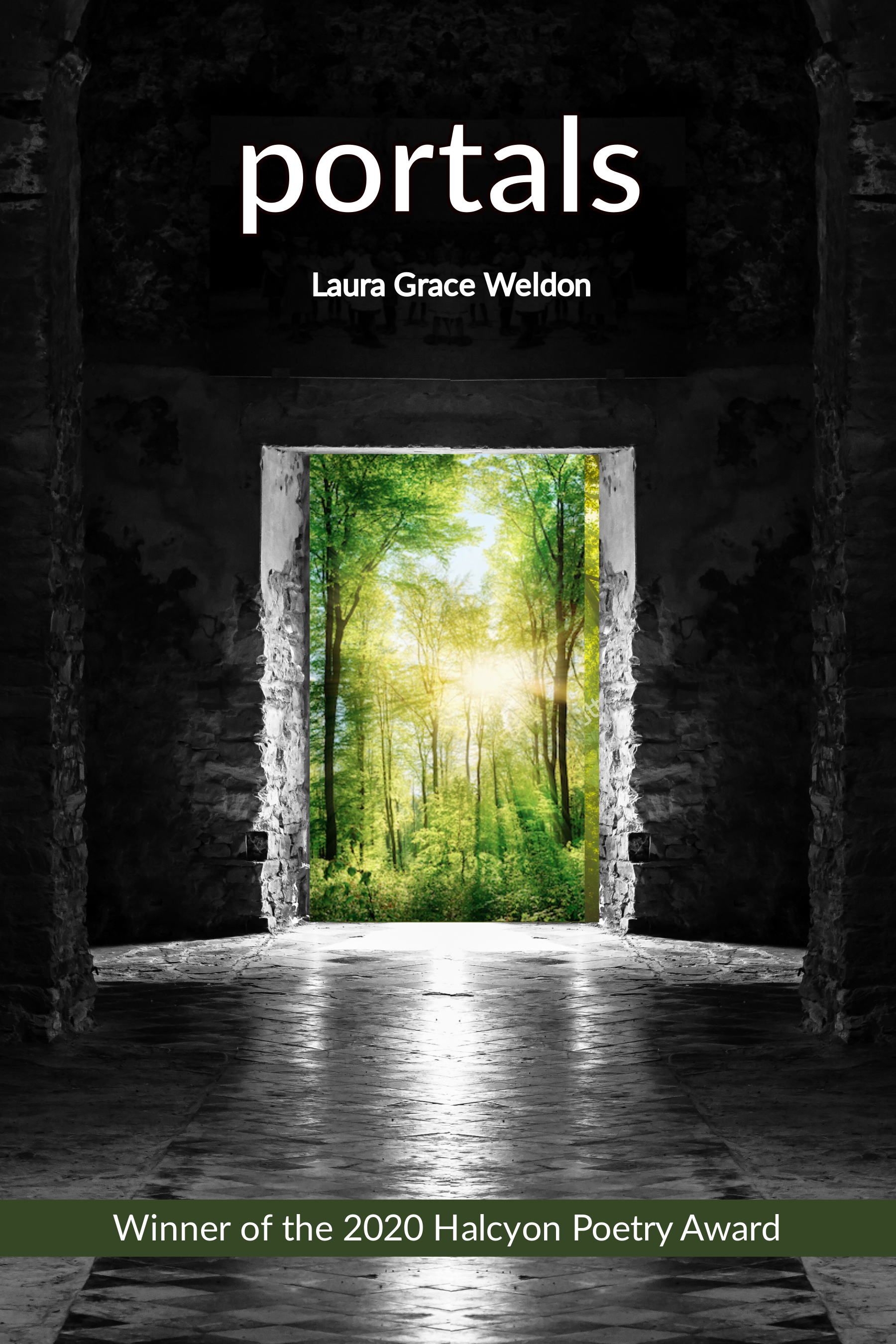
Last fall I sent a pile of newer poems to Middle Creek Press, hoping I might salvage something out of what little I wrote during our ongoing pandemic misery. Turns out that collection, titled Portals, won the 2020 Halcyon Poetry Prize. Wild, right?

What an honor to have Middle Creek publisher David Anthony Martin select my manuscript. This collection is packed with poems about sycamore leaves, gut bacteria, quicksand, protests, yeast, talking peonies, insects, inflation, and consequential strangers. Here’s a sample: 

portals open like hands

People seem to think a writer writes in isolation, pulled only by some invisible drive to assemble words into form. For years I felt that isolation acutely. Heck, I didn’t even admit I was writing and publishing poems until my first collection, Tending, was accepted by a small poetry press. All that time the work of other poets pulled me onward. Their poems nourished me and helped me recognize poetry is in us all.

When the publisher of my first collection told me to solicit blurbs by reaching out to poets I admired, the task seemed unimaginable. Approach a busy stranger, someone I’d deeply respected from a distance, then ask for a favor? A distinctly time-consuming favor? I was appalled. Maybe my book could be published with a blank back cover. Maybe I could pretend the blankness was some kind of artistic choice. Turns out that wasn’t necessary. Every poet I contacted was gracious, even the poets who turned me down. Their kindness introduced me to the kindness of the writing community. (There are unkind pockets too, but I’m too small potatoes to be affected.)

My next collection, Blackbird, continued to teach me just how beautiful the writing community can be. Writers go out of their way to amplify the work of other writers. They mentor, they share, they podcast, they teach.  Many dedicate their time to make literary journals, literary organizations, and literary events possible.

I am the recipient of these kindnesses and more. I am endlessly grateful for Rosemerry Wahtola Trommer’s bountiful forward and for generous blurbs by James Crews, Donna Hilbert, and Phyllis Cole-Dai. Many thanks to Middle Creek publisher David Anthony Martin; it is a delight to work with a press dedicated to growing a “mycelial network of artists and readers.” Thank you to the poetry editors who published many of these poems in print and online journals. Much appreciation to the poets from our 811s poetry critique group who helped reshape these poems: Laurie Kincer, Diane Kendig, Roberta Jupin, Geoff Polk, and Richard Ferris. Appreciation to my longstanding writers’ group: Connie Gunn, Sarah Vradenburg, and Margaret Swift.  Endless thanks to poetry readers who share my work – you truly light the way for every poet. Most of all, thank you to my family who have held it all together during these surreal and humbling times.

Portals is now available from the publisher. You can also request it at your local library, favorite indie bookstore, or indie-bookstore based Bookshop.org. And you can also get it via Amazon

Forgetting Books We’ve Read

“If we think of a library as a city and a book as an individual house in that city, each sentence becomes one tiny component of that house. Some are mostly functional – the load-bearing wall, the grout between the bathroom tiles – while others are the details we remember and take away, perhaps recalling their texture and colour when we assemble our own verbal dwelling-place.”  –Jenny Davidson

Who I am is constructed, in part, out of books I’ve read. When I read, especially if I love what I’m reading, I feel as if the book has entered my very bone marrow. But I read, on average, four or five books a week. Often more. Where has my mind put decades of books?   

Julie Beck’s article in The Atlantic offers an answer. It’s titled, “Why We Forget Most of the Books We Read.” She writes, “people often shove more into their brains than they can possibly hold.” She cites a study from 2009 showing the average American encounters 100,000 words a day. Our memories simply cannot keep all this information readily available. I say pish posh, the memories we take in from what we read has to do with its relevance. We hang on to the information that most impacts us, intrigues us, or that we put to use.  

Beck also points out we’re better able to recall the context in which we read a book, so we remember reading a green-jacketed novel based in Sierra Leone while on vacation, but are likely to recall the book’s contents. To me that’s one of memory’s gifts. I’ll never forget reading The Color Purple while nursing my firstborn or reading The World According To Garp while on the couch recovering from knee surgery or becoming so immersed in by Kathleen Grissom’s The Kitchen House while at an airport departure gate that I missed my flight.

Okay, maybe I feel threatened by the idea that I’ve wasted literal years of my life reading books that simply float beyond memory into a void. But there’s plenty of evidence that books change us, whether we remember them well or not at all.

  • A study at Emory University found reading can have long-term effects on our biology. Study participants read only part of a novel, yet still showed significant increases in connectivity between the left and right brain regions. This effect lasted for several days. Imagine the effect of reading regularly!   

  • Stanford’s Natalie Phillips found an overall increase in blood flow during close reading. She writes in Stanford News, “paying attention to literary texts requires the coordination of multiple complex cognitive functions.” Blood flow also increases during pleasure reading, but in different brain areas. Phillips suggested that each style of reading can create distinct patterns in the brain that are “far more complex than just work and play.” 

  • Regular readers, according to various studies, are much more likely to volunteer, donate to charity, and vote than non-readers.

  • Research demonstrates that people who find themselves most transported by fiction and who express the most empathy for the book’s characters are more likely to express empathy in real life. 

  • Fiction readers score higher on theory of mind, which is the ability to understand other people’s thoughts, emotions, and perspectives. It’s likely to stem from the way we engage with stories. As researcher Keith Oatley writes, ”These effects are due partly to the process of engagement in stories, which includes making inferences and becoming emotionally involved, and partly to the contents of fiction, which include complex characters and circumstances that we might not encounter in daily life. Fiction can be thought of as a form of consciousness of selves and others that can be passed from an author to a reader or spectator.” 

Yes, we “forget” books we’ve read in the sense that we can’t easily recall them, or maybe recall but can’t remember much of the plot. In school-like terms, we can’t pass the test. I can’t help thinking, however, that this goes much deeper than surface recall.

Tiny babies take in language all around them. They learn, on their own timetables, more and more words. (Which adults around them can’t help but “test” with “What does an owl say?” and react in delight when the child hoots.)
They also learn what reactions words elicit (Making the sounds for “Want milk” turns, magically, into actual milk.) And they learn much more – how words convey and transform emotion, how words affect people differently, how words on
a flat page can hold a world-stretching story, how words can soothe and harm and instigate and become vehicles for imagination. Thankfully babies acquire language without testing them on where they first learned a word or what picture book taught them about the sounds made by owls.

I believe we take books in much the same way. They sink in deep and stay there whether we can dredge them back up to the surface of recall or not. I can remember some books reasonably well without Google’s help, but those are a fraction of the books that expanded my perspective, deepened my spiritual outlook, and gave me glimpses of lives well beyond my own. I may not remember the titles I’ve loved but at the same time I know they changed me. Still, I’ll let Billy Collins have the last word. 

FORGETFULNESS   by Billy Collins

The name of the author is the first to go
followed obediently by the title, the plot,
the heartbreaking conclusion, the entire novel
which suddenly becomes one you have never read, never even heard of,

as if, one by one, the memories you used to harbor
decided to retire to the southern hemisphere of the brain,
to a little fishing village where there are no phones.

Long ago you kissed the names of the nine muses goodbye
and watched the quadratic equation pack its bag,
and even now as you memorize the order of the planets,

something else is slipping away, a state flower perhaps,
the address of an uncle, the capital of Paraguay.

Whatever it is you are struggling to remember,
it is not poised on the tip of your tongue
or even lurking in some obscure corner of your spleen.

It has floated away down a dark mythological river
whose name begins with an L as far as you can recall

well on your own way to oblivion where you will join those
who have even forgotten how to swim and how to ride a bicycle.

No wonder you rise in the middle of the night
to look up the date of a famous battle in a book on war.
No wonder the moon in the window seems to have drifted   
out of a love poem that you used to know by heart.


A Short Bridge Between Us

I’m standing in line for my second dose of Pfizer vaccine in a bustling CVS. Everyone waiting joins in a jovial camaraderie. The man wearing a United Steelworkers t-shirt says he can’t wait to get the shot. “I’m retired,” he says. “I spend my time traveling to see my five grandchildren, that’s what I do. Until Covid. I haven’t seen them in a year. That includes a three-month-old granddaughter I haven’t held.” He shakes his head. “You can’t have a relationship with a baby on a screen.”

A woman with a soft accent takes off her coat and folds it over her arm. “I am so happy to get my second shot,” she says. “I feel so lucky.”

A man with a ponytail in his curly gray hair says, “I don’t know who I’m going to be seeing of my family, what with everyone divided over politics. I’ll keep quiet if that’s what it takes to sit down at the same table.” He doesn’t say what “side” he’s on. It doesn’t matter. We’re in this together.

I think about a report I recently read. It’s based on a national survey taken in late January of this year. Its focus is what Americans prioritize and what they think others prioritize for this country’s long-term future. The survey included Trump voters and Biden voters. Instead of asking only direct question about support or opposition to various positions, they also asked choice-based questions to get beyond what respondents believe they should say or think most people would say.

The results? Americans share long-term goals to a remarkable degree. Here’s a summary of their findings.

Across race, gender, income, education, generational cohorts, and 2020 presidential vote, there is stunning agreement on the long-term national values and priorities that Americans believe should characterize the country moving forward. Chief among them: high quality healthcare as a necessity, not a privilege; an overwhelming commitment to individual rights; and upholding equal treatment for all, but not necessarily equal outcomes.

Where significant differences in aspirations do emerge, they are almost entirely political in nature. The evidence suggests Americans mistake intensity of partisan disagreement on a small number of issues (e.g., immigration) for breadth of partisan disagreement across a far-ranging number of issues.

Collective illusions — significant gaps between personal and perceived societal aspirations for the nation — as an obstacle to progress. For example, there is a surprising level of support for action on climate change and conservation. However, Americans don’t recognize it. Climate action privately ranks as the third highest personally-held national aspiration out of 55 possibilities; yet, Americans believe that ‘most others’ would rank climate action as a much lower priority (#33).

Biden voters and Trump voters share a sense of urgency around 5 policy objectives. Voters from both political camps want improvement in the near-term on healthcare, keeping communities safe, helping the middle class, modernizing infrastructure, and criminal justice reform.

It’s the retired steelworker’s turn. Before sitting in the chair for his shot, he turns to us. “I’m leaving two weeks from today,” he says with a grin, “driving across Ohio to hold the baby girl I’ve been missing.”

The dark-haired woman is next. She says “I hope I don’t cry. This has me all emotional.”

Then it’s my turn. I find it hard to contain my exuberance. “I expected trumpet fanfares with each shot!” I say to the pharmacist. What does she do? She bursts into song.

Beyond Gratitude


“Hope has never trickled down, it has always sprung up.”
~Naomi Klein     

I have a strong urge to kneel and kiss the floor right here in CVS . Or maybe to prostrate myself facing the pharmacy. I am weak with gratitude for the vaccine I just received.

Its development is a near-miracle which began with variolation techniques used to ward off smallpox as practiced by Turkish women back in the early 1700s, or earlier by healers in southern Africa, or perhaps as far back as 1000 AD in India and China. The miracles continue today thanks to researchers who brought us the first-ever mRNA-based vaccines in record time (researchers of many nationalities and immigration statuses).    

It took weeks of calls and clicks to schedule this appointment. Now I feel disoriented.  I haven’t been in a store for nearly a year. So much stimulus — doors that open to let me in, shelves with products, actual shoppers! When I sit down with the nurse to get my inoculation I have to stop myself from using the word “grateful” in every sentence.

Grateful isn’t large enough to express this feeling. I’m not aware of a term that can fully encompass the year all of us have been through. A word that includes our isolation and fear, our efforts to pull through and pull together while apart. A word that acknowledges all the ways we’ve been divided. A word that doesn’t forget a leader who, according to experts, could have averted forty percent of Covid-19 deaths in the U.S.  A word that incorporates fear, grief, exhaustion, fury, longing, despair, hope, uncertainty, and so much more.

I wait the required 15 minutes before I can leave. I watch others who are also waiting. They look at their phones or listen to the nurse talk about potential side effects. Every person here looks beautiful to me. Already I imagine our antibodies responding to this shot, better protecting the trillions of cells that make it possible for us to breathe, smile, crack awful jokes, hug, sleep, dream.    

As I walk to my car I recognize the heaviness in my chest as the weight of guilt for getting the shot before anyone anywhere who might need it more than I do. Still, I sit in the driver’s seat, tears welling in my eyes, and whisper thank you thank you thank you. Then I turn the music up louder than I should, start the car, and drive home.

Under The Noise

The World Health Organization reports 2,462, 911 souls have been taken by Covid-19 so far. WorldoMeter reports 2,479, 882. By some accounts we have already passed a half million deaths in the U.S. Each death the loss of a uniquely precious being.

There are many, this last pandemic year, who have fervently pushed for life to “return to normal.” Under that noise is another sound, the human community wailing. Each new grief amplifies our losses. Everywhere, keening.   

The largest share of deaths, here and around the world, are our elders. What has been taken cannot be fathomed. A proverb from Mali reminds us, “When an old man dies, a library burns to the ground.”

We haven’t yet begun to address what brought us such a toll, including the greed underlying disinformation, mismanagement, and structural inequality. I hope, as we do, we center on regenerative justice for people and for all living systems.

We haven’t yet begun to fathom our losses, let alone how to honor those lives. I hope, as we do, we tell stories, we create, we cherish. I hope we, in the end, make this about peace.  

Re-member us,
you who are living,
restore us, renew us.
Speak for our silence.
Continue our work.
Bless the breath of life.
Sing of the hidden patterns.
Weave the web of peace.

Judith Anderson   

Clichés

“Story is an affirmation of our ties to one another.” 
~Terry Tempest Williams

My spouse and I are listening to a not-so-great audiobook as our long drive’s entertainment. After an hour or so I turn it off for a much-needed break. Mark is surprised I don’t like it. (Apparently he hasn’t heard my sighs.) I suggest the problem is not the plot but the clichéd writing. That’s when my marriage comes into question.

This man, with whom I have made children and to whom I have pledged lifelong fidelity, claims clichés are expected. He sees my expression but unwisely goes on to say he believe clichés are actually necessary.

It’s lazy writing, I tell him. As an editor I excise clichés with a fierce pen. (Although we editors no longer edit with pens.) 

Because we’re stuck in the car, I give him a bit of the cliché talk I share with writing classes. I say thanks to imaging studies, we know what writers have long understood. Sensory-rich language, particularly when embedded in stories, makes writing come alive for the reader.

When we take in straight-up information like a lecture or textbook, our brains show activity largely in the language-processing area. This indicates we are doing the basic work of decoding sounds or symbols into recognizable meaning. In contrast, a well-told story activates not only our language processing areas but also other areas of the brain – putting us inside the story. Say we read about walking into a much loved rib joint where smokers are finishing up bbq pork, greens and onions are frying, a milkshake is being poured from one of those chilled stainless steel malt cups. Our sensory cortex is activated as if we smell the smoker, hear the greens frying, see the thick milkshake slump into the glass. We may even salivate in anticipation.

Consider the way news comes to us. During a quick televised report we might hear brief facts about a suspected break-in on the west side of town, no one hurt, police investigating. We process the information along with the day’s avalanche of facts, unlikely to pay much attention unless we live on the west side or have our own troubling break-in memory. But if we’re told the story differently, we experience the story’s events. Say the homeowner is interviewed. She describes sitting on the couch late at night, snuggled up in her pajamas watching a movie. She thinks she hears something on the back porch. She mutes the volume, listens, gulping back her fear. When the doorknob rattles she grabs her phone. Suddenly broken glass is scattering across the kitchen floor. She leaps from the couch and runs to the front door, her fear-moistened hand scrabbling to turn the knob, and then she’s running barefoot across the snow to her neighbor’s house. She pounds on the door, almost collapsing in relief when she’s welcomed inside. As she tells the story, you react.. Emotional areas of your brain for fear and relief light up. Your motor cortex lights up in the area controlling your hand as if you too are scrabbling at the doorknob, then lights up in your legs and feet as if you too are running down the steps and across the snow.

That’s why I expound on this with my writing students, I tell Mark. So they know to let the reader’s arms feel their strain as they try to lift Grandma out of bed, preserving her dignity though they feel like weeping. So they help readers feel enraged at their high school math teacher’s expression when he suggested they drop out of calculus. So the reader’s skin prickles when they write about an unfair workplace. Mark is nonplussed. This man, who tears up at animal reunion videos, says maybe people don’t feel things as intensely as I do.

These are fighting words, but I’m still in explain-mode.

I’m talking brain imaging, I say. Our brains mirror other brains; that’s how we understand one another. He’s still got his patient listener face on, so I continue. This explains how clichés impair writing. Because when we hear a cliché like put the cart before the horse our brains don’t evidence any interest. That saying was originally a clever use of language the first 1,000 or 100,000 times it was said but our brains react minimally to clichés. Brain imaging shows we take them in only at the most basic level. Phrases like “scared out of my wits” or “made of money” were original once, but now they deaden our responses.  Besides, many clichés in common usage come to us from generations ago, when everyone knew how foolhardy it was to put the actual cart before the actual horse. Take the cliché “caught red-handed.” This likely came from centuries back, when serfs worked the land of some lord or another. There were strict rules against poaching. Even if one’s family was starving on what little they could grow, it was illegal to hunt on the lord’s land. Caught red-handed meant you had blood on your hands and would be severely punished.         

Mark alleges he still likes clichés and gleefully adds the cliché, “You can’t teach an old dog new tricks.”* It’s a game now. We continue to toss out ever more ridiculous clichés until we weary of them and put the audiobook back on.

Listening to it, we finally we reach a cliché-related accord. I agree with him that a book’s character can and perhaps should use clichés if it’s in keeping with that character. In this pop mystery, I can see why a character or two would talk this way. Mark agrees with me that the book we’re listening to also uses clichés in description and plot development outside of character narration, and it’s off-putting. We listen a few more miles and he says. “Now I can’t help but hear all the clichés. Thanks.” We give up on the book.

Yes, we’re still married. And yes, I still give that cliché talk but have learned to keep it in the classroom.

*The expression, “you can’t teach an old dog new tricks” first appeared in a book of husbandry back in 1523.  It’s also not true. Studies show you can teach old dogs new tricks, in fact senior dogs do better than young dogs when learning tasks that require inference or reasoning.

First published in The Blue Nib Literary Magazine.

Clonk

“I could see why Archimedes got all excited. There was nothing finer than the feeling that came rushing through you when it clicked and you suddenly understood something that had puzzled you. It made you think it just might be possible to get a handle on this old world after all.”   ~Jeannette Walls 

I took Spanish language classes from seventh to ninth grade. Whatever I learned is largely lost. Lost too are higher level math and chemistry lessons. But for some reason I can remember the theme song from Gilligan’s Island reruns and the show’s one-note characters trotting through formulaic episodes.

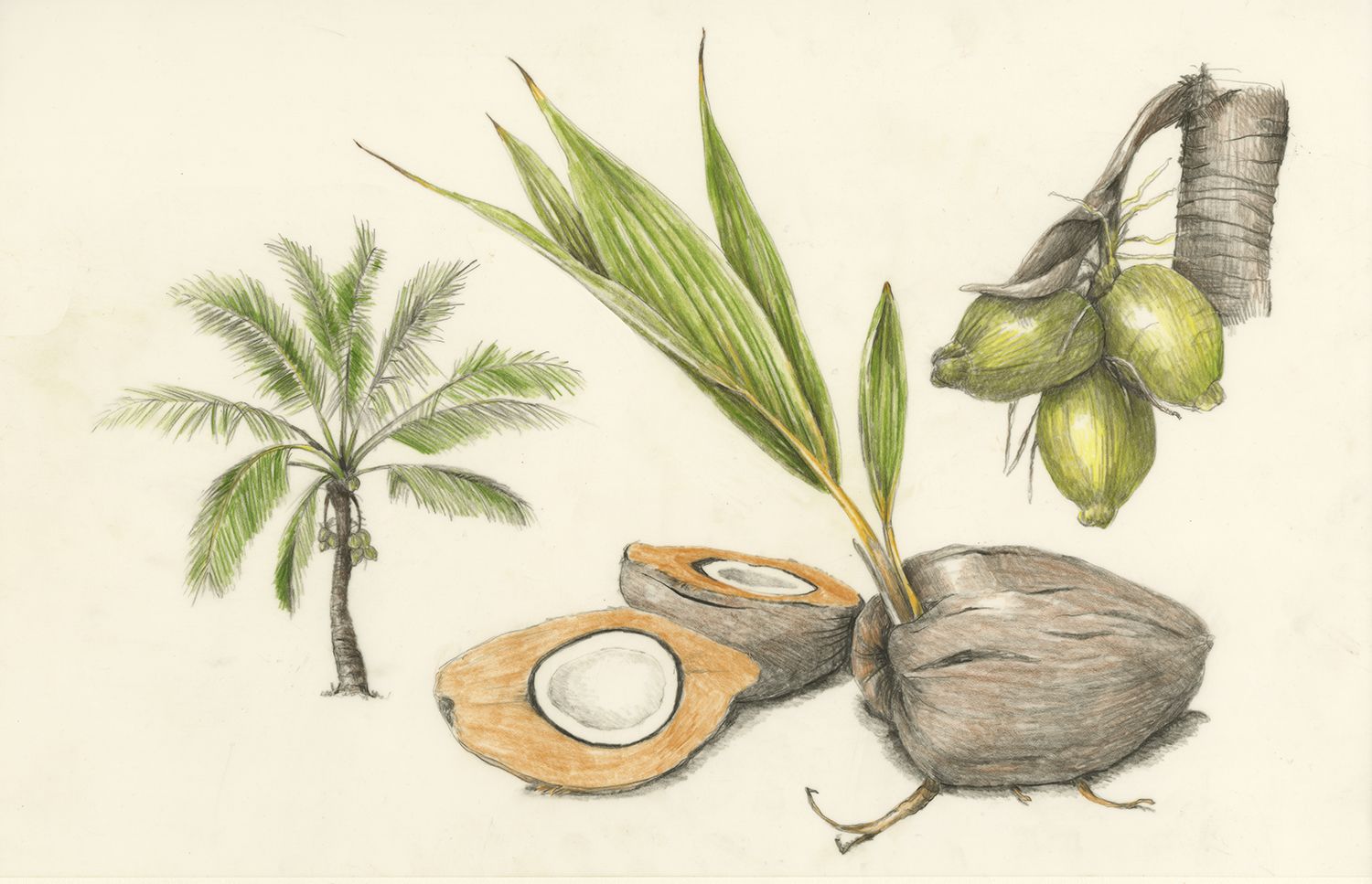
Lately I find myself thinking about the show’s recurring plot device, that of being hit on the head by a falling coconut. This was a fix for nearly anything. The professor is stumped while theorizing. He walks under a coconut tree. CLONK, he can suddenly solve mysteries of the universe. Mary Ann is worried that she isn’t pretty enough until, CLONK, she thinks she’s got movie star glamour. I seem to recall Gilligan was clonked most often.

Even on a show as silly as this one, being hit by a coconut was surely a metaphor for being knocked well beyond preconceived ideas and limiting beliefs. 

If a clonk on the head with a coconut could dispel my problems I’d line up for a whap. And if the people I love asked, I’d cure their worst troubles with a coconut whap too. This contradicts what I’m beginning to understand about the powerful lessons embedded in mistakes and suffering. But as I get older I get more impatient. The coconut option just seems a hell of a lot easier.

I imagine ridiculous, Gilligan’s Island-worthy scenarios where a mass coconut drop on our country erases racism, sexism, inequality, greed, heck, all our major problems. I imagine us rubbing our heads with peaceful, bemused expressions as we gather up the coconuts and make each other inventive, delicious meals out of all that bounty.

Until I remember, on Gilligan’s Island, whatever problems were solved by a sudden coconut hit were always cancelled out by an inevitable follow-up coconut hit. The professor forgets his brilliant insight, Mary Ann again judges her looks by impossible standards, Gilligan transforms back into a clueless underling. Getting that second hit is pretty much what happens to most of us when epiphanies slide from memory, when awe fades, when the weight of consumer culture drags us back into ruts.  

I don’t know about you, but I’ve encountered a lot of falling coconuts. Maybe the lesson is to look up.

Earth’s Bright Future

I clicked on an article titled, “Study finds our galaxy may be full of dead alien civilisations,” thinking, Wow, a career in space archeology would be fascinating.

Researchers used an extended version of the Drake Equation, which determines the odds of extraterrestrial intelligence existing in our galaxy, to consider factors necessary for a habitable environment. They speculated that intelligent life may have emerged in our galaxy about 8 billion years after it was formed. (Here on Earth, humans emerged 13.5 billion years after the Milky Way was formed.)

Neat!

And then I got to the passage about “the tendency for intelligent life to self-annihilate…”

What? We know about the fall of empires but did we know science says our species’ selfishly destructive ways are likely take us all out? According to the article,

“While no evidence explicitly suggests that intelligent life will eventually annihilate themselves, we cannot a priori preclude the possibility of self-annihilation,” the study reads.

“As early as 1961, Hoerner suggests that the progress of science and technology will inevitably lead to complete destruction and biological degeneration, similar to the proposal by Sagan and Shklovskii (1966).

“This is further supported by many previous studies arguing that self-annihilation of humans is highly possible via various scenarios, including but not limited to war, climate change and the development of biotechnology.”

This is staggering to consider, especially while we are living through (well, hopefully living through) a tangled knot of crises including a pandemic, climate change, widening inequality, and political unrest. I’m pretty sure we don’t want to leave a dead planet relevant only to space archeologists, even if we currently seem to be heading that way.

I take refuge in hope. Here are a few of the many reasons why.

  1. Crisis has saved us in the past. After all, the Renaissance followed the Black Plague. And there’s much earlier evidence that crisis leads humanity forward. It appears a near-cataclysmic moment in the Upper Paleolithic period led to the preeminence of modern humans. Environmental degradation reduced our kind to near-annihilation. We emerged from this crisis only because we developed new collaborative practices such as trading with strangers and loyalty initiation rituals, engendered to create grudging trust. It took a near-extinction level events for humanity to socially evolve in the Paleolithic. Imagine how our response to this pandemic might move us forward.
  2. Nonviolent action is not only an ethical choice, it is actually the most powerful way to shape world politics. Erica Chenoweth, a political scientist at Harvard University, examined hundreds of social/political change movements over the last century, Chenoweth found that nonviolent campaigns are twice as likely to achieve their goals as violent campaigns. And although the exact dynamics depend on many factors, she has shown it takes around 3.5% of the population actively participating in the protests to ensure serious political change.
  3. A recent survey by World Economic Forum indicates an overwhelming desire for change. Out of the more than 21,000 adults from 27 countries who were questioned, 86% would prefer to see the world change significantly – becoming more sustainable and equitable – rather than revert to the status quo. Even on an individual level,  72% say they prefer their life to change significantly rather than go back to how it was before the COVID-19 crisis started. Numbers are somewhat lower for the U.S., but a majority support initiatives to combat climate change.

How to bring about real change? That’s a huge topic, but here are a few hopeful glimpses.

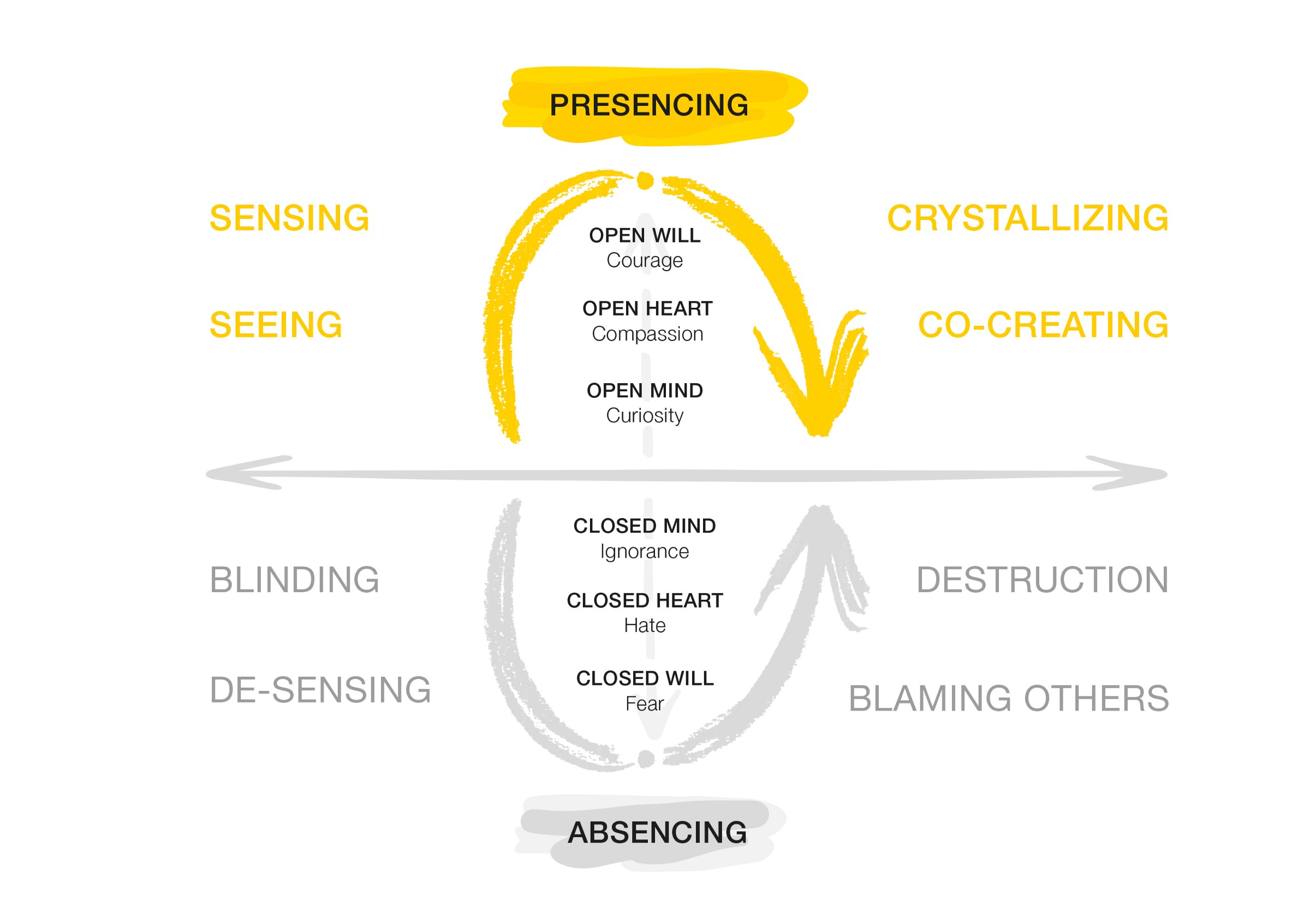
Increasing momentum for positive social change is happening around the world, especially among young people. Otto Scharmer, a senior lecturer at MIT, points out these movements differ from earlier student moments because they emphasize a change in consciousness, collaboration with people of all ages, and using technology in new ways to shift awareness toward solutions. Dr. Scharmer explains that this activates an axial shift in learning and human development, moving away from closed to open presence.

&&&&&

Cooperative behavior is not only natural, it’s contagious. When people benefit from the kindness of others they go on to spread the compassion. The tendency to “pay it forward’ influences dozens more in an enlarging network of kindness. And even more heartening, the effect persists. Kindness begats more kindness, blotting out previously selfish behavior. It doesn’t seem to matter how people are exposed to kindness. They might read about altruistic behavior, see it in a video, or witness it in person. It also doesn’t seem to matter if the person offering kindness was similar to them, or if the help was material (like money) or non-material (like comfort). We are influenced not only by the people around us but also what we’re exposed to online and in the media. Time to pay closer attention to our influences, amplifying the kindness that’s so intrinsic to our human nature.

&&&&&

Social justice makes us happier. Interviews with nearly 170,000 individuals across 28 countries show people whose countries emphasize social justice are happier, more pleased with their lives, and show greater trust in one another. Greater social justice demonstrates that people have value, which is crucial to psychological well-being. It also builds confidence in communities which, in turn, improves our relationships with others. It may help reduce prejudice as well. Social justice is shown to benefit the economy, including its gross national product. Countries with higher social justice showed higher GDP. To build a stronger economy plus a happier, healthier population, countries need to prioritize social justice policies. (Studies in the United States also show people experience greater happiness in states that spend more to promote the public good such as parks, libraries, public safety, and infrastructure.)

&&&&&

Covid-19 as well as climate change brings into sharp focus what we need to do to restore the environment. Emergency physician James Maskalyk and Dave Courchene, founder of the Turtle Lodge International Centre for Indigenous Education and Wellness and chair of its National Knowledge Keepers’ Council, explain.

“The answer is already here, and has been known for thousands of years. It is in the wisdom and sacred teachings of Indigenous people across the world. They have the deepest connection to the spirit of the Earth and its history, and from this intimacy, healing can occur.

This is neither speculation nor fantasy. A 2019 study from the University of British Columbia, looking at biodiversity in Canada, Australia and Brazil, found more species of birds, animals and amphibians on land managed by Indigenous people, even greater than in national parks. In the same year, a collaboration involving 50 countries and more than 500 scientists, the Intergovernmental Science-Policy Platform on Biodiversity and Ecosystem Services (IPBES), concluded that human activity and the resultant lack of biodiversity allowed for five new diseases to emerge every year with the potential to infect humans. They noticed that Indigenous land, though it faced the same pressures, was eroding less quickly. Capturing their knowledge, and expanding their stewardship, was cited as necessary for a healthier world.

No one created the problems that threaten to overwhelm us from malice. Not the plagues, nor climate change, nor extinctions. They have occurred as side effects of a system whose rapid growth is both encouraged at all costs, and blind to natural limits.”

&&&&&

Creating a truly regenerative economy means moving into transformative change. Back in 1973, E.F. Schumacher, author of the influential book Small Is Beautiful, wrote about the importance of people and place-based economics built around relationship, craft, and environmental stewardship. While some of Schumacher’s observations don’t stand up nearly 50 years later, he would be pleased with today’s increasing focus on local food movements, ethical investment, worker-owned companies, and regenerative business models.  We are becoming more aware that we must shift our way of being on the planet from an exploitative to a regenerative presence. There are many inspiring paths to explore. I particularly appreciate Daniel Christian Wahl‘s book, Designing Regenerative Cultures, as well as Charles Eisenstein’s body of work including Climate: A New Story, The Ascent of Humanity, and Sacred Economics. For the most immediate collaborative solutions, I’m impressed by (and have written for) Shareable. Among other things, they offer 300 free home and neighborhood sharing guides. Here’s a bit about the sharing revolution, from their “about” page.

New and resurgent solutions are democratizing how we produce, consume, govern, and solve social problems. The maker movement, collaborative consumption, the solidarity economy, open source software, transition towns, open government, and social enterprise are just a sample of the movements showing a way forward based on sharing.

The sharing transformation shows that it’s possible to govern ourselves, build a green economy that serves everyone, and create meaningful lives together. It also suggests that we can solve the world’s biggest challenges — like poverty and global warming — by unleashing the power of collaboration. At the core of the sharing transformation is timeless wisdom updated for today — that it’s only through sharing, cooperation, and contribution to the common good that it’s possible to create lives and a world worth having.

And herein lay the engine of the sharing transformation: When individuals embrace sharing as a worldview and practice, they experience a new, enlivening way to be in the world. Sharing heals the painful disconnect we feel within ourselves, with each other, and the places we love. Sharing opens a channel to our creative potential. Sharing is fun, practical, and perhaps most of all, it’s empowering. 

&&&&&

You may be activating change right now by the content of your conversations, the ideas you see taking hold around you, the way you stay informed, the way you raise your children and treat other children, how you interact with others, how you choose to spend your money as well as not spend your money, the way you earn money, the causes you advocate and believe in, and how you interact with our living planet. You, like so many change-makers, may already be living through deeply felt, personally lived ethics. That itself causes rippling change. Torchbearers of the last century who brought about so much good could do so because awareness shifted and deepened. A side benefit is depriving alien archeologists of the chance to explore a ruined planet!

Historically, pandemics have forced humans to break with the past and imagine their world anew. This one is no different. It is a portal, a gateway between one world and the next. We can choose to walk through it, dragging the carcasses of our prejudice and hatred, our avarice, our data banks and dead ideas, our dead rivers and smoky skies behind us. Or we can walk through lightly, with little luggage, ready to imagine another world. And ready to fight for it. ~Arundhati Roy