My Father’s Battle

“Life as a whole expresses itself as a force that is not to be contained within any one part. . . . The things we call the parts in every living being are so inseparable from the whole that they may be understood only in and with the whole.”  ~Goethe 

This essay first appeared in the journal As It Ought To Be.

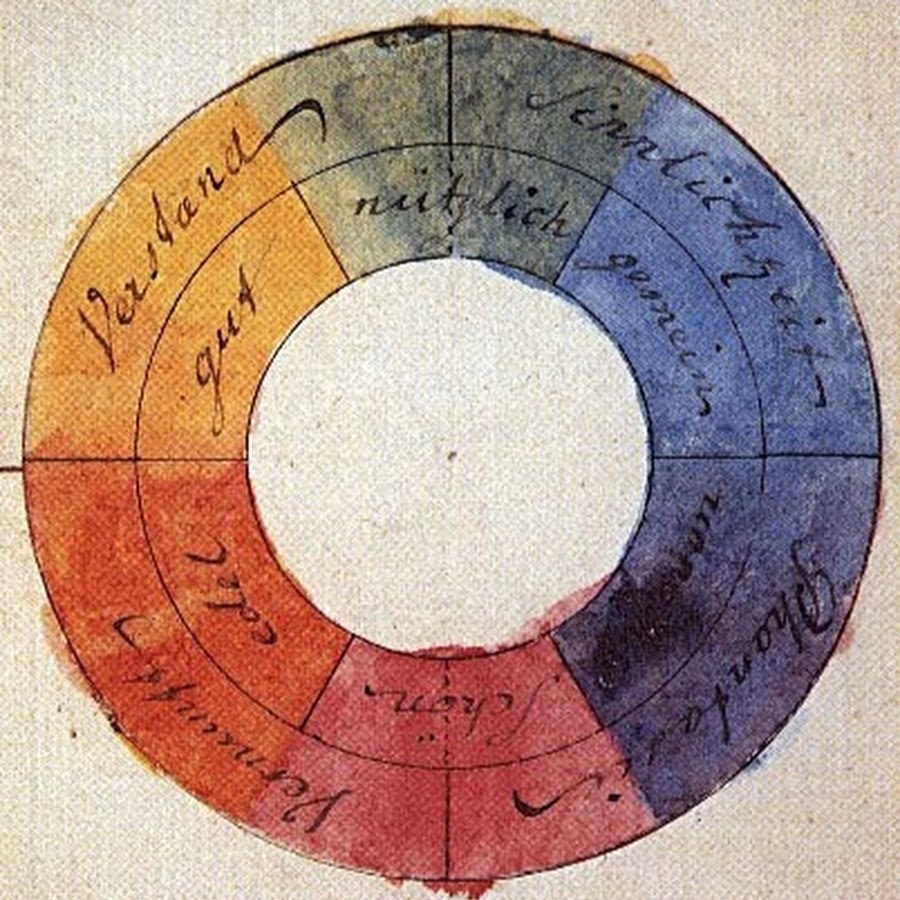
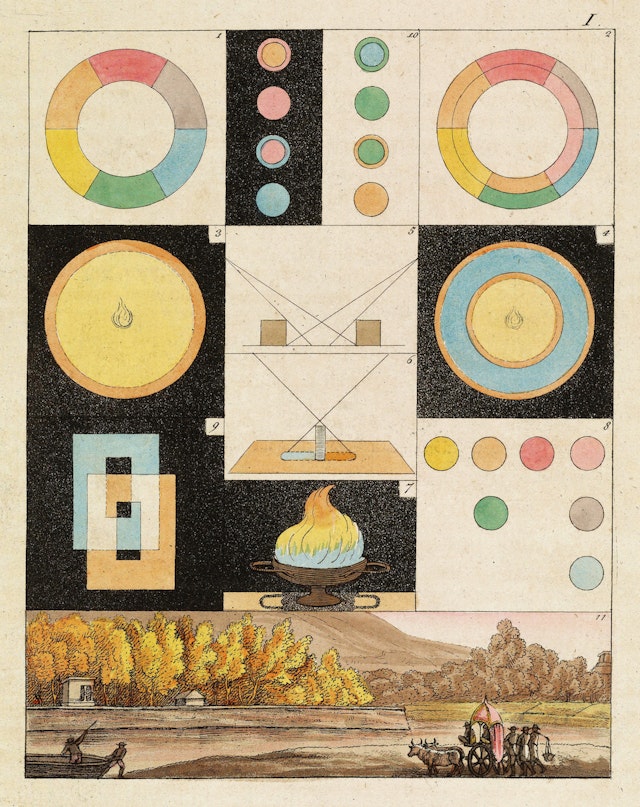
Illustrations from Johann Wolfgang von Goethe’s groundbreaking Zur Farbenlehre (Theory of Colours)
Roger Fisher’s Brilliant Solution

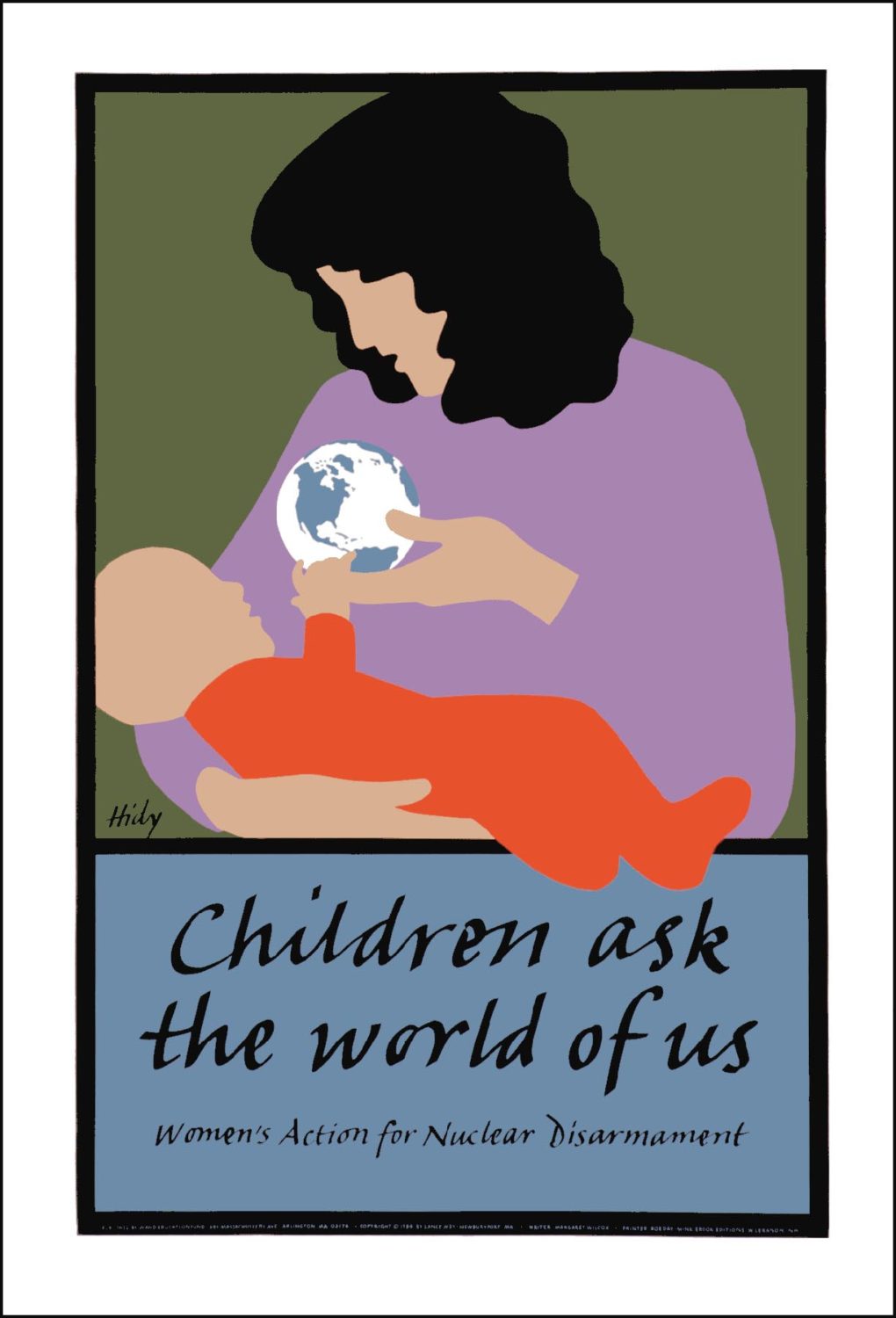
A month or so after my daughter was born, I took friends upstairs to see her nursery. She didn’t sleep there yet, instead she slept in my arms or in the bassinet next to our bed, but this space was hers. It was painted pale yellow and the rocking chair was softened by a handmade quilt hung over the back. On the wall was the Lance Hidy poster “Children Ask The World Of Us.” The room had, to my new mom heart, the feel of a sanctuary.

The wife was my oldest friend, her husband was a man who kept us laughing with his stories, and they were expecting their first baby soon. He snorted when he spotted the poster, then brought up a conflict that US politicians were blustering about (and covertly messing with) at the time in the Middle East. He said, “We should just nuke them.”

I wanted him and his poisonous opinions out of my baby’s bedroom. I would have been horrified by any human advocating the use of nuclear weapons under any circumstances, but I was even more resoundingly appalled because this man was the son of Middle Eastern immigrants and had recently qualified as a doctor sworn to heal, yet here he was sanctioning the most unspeakable harm. Even while I was sputtering an angry response, I realized he may well have been mocking my pacifism. I hadn’t been quiet about my views or my activism. I even painted onesies with cheery peace slogans under smiling suns which, in retrospect, may have been a bit too earnest as baby gifts for my non-peacenik friends.

My baby girl is grown now but that moment comes back to me in these calamitous times. The memory also brought up a remarkable antidote to nuclear war that was proposed in all seriousness back in 1981 by a man named Roger Fisher.

Fisher had served in WWII, argued cases before the US Supreme Court, worked as a Harvard law professor specializing in negotiation, and co-authored a popular book Getting To Yes.  Throughout his career he was deeply committed to peacemaking. For example, he was involved in the Camp David summit that led to an Israeli–Egyptian peace treaty in 1979, helped negotiate the release of US hostages held in Iran in 1981, and later worked directly to end of South Africa’s apartheid rule. Fisher devised negotiation tactics that ensured all parties were fully represented, including a cooperative interest-based negotiation process now commonly used around the world. The man was no slouch in the hard work of creating a more peaceful world.

Then he took on the utter idiocy of nuclear weapons. Writing March’s 1981 issue of The Bulletin of the Atomic Scientists (the entire article is a worthy read) Fisher pointed out that there are no military solutions to the world’s largest problems. “The only means we have available,” Fisher wrote, “is to try to change someone’s mind.” Like any good negotiator, he explains why negotiation must include each side’s interests with full participation in joint problem-solving. And, further, to understand and to care about one another as the only way to lasting peace. His essay includes specific recommendations but my favorite and the most controversial is the following.

There is a person who is required to accompany the president with an attaché case containing the codes needed to authorize firing nuclear weapons. Fisher imagines this person as a young man, perhaps a naval officer named George, who is around the president every day. That person-to-person familiarity is the heart of Fisher’s nuclear deterrence. Because in his proposal, the nuclear codes are not in the case. Here’s how Fisher explains it.

My suggestion was quite simple: Put that needed code number in a little capsule, and then implant that capsule right next to the heart of a volunteer. The volunteer would carry with him a big, heavy butcher knife as he accompanied the President. If ever the President wanted to fire nuclear weapons, the only way he could do so would be for him first, with his own hands, to kill one human being. The President says, ‘George, I’m sorry but tens of millions must die.’ He has to look at someone and realize what death is — what an innocent death is. Blood on the White House carpet. It’s reality brought home.

When I suggested this to friends in the Pentagon they said, “My God, that’s terrible. Having to kill someone would distort the President’s judgment. He might never push the button.”

Exactly.

We have enough nuclear weapons to destroy the world many times over with at least nine countries possessing nuclear weapons. The overall stockpile is lower than it was in the Cold War era but, as the Union of Concerned Scientists note, “the warheads on just one US nuclear-armed submarine have seven times the destructive power of all the bombs dropped during World War II, including the two atomic bombs dropped on Japan.” And global spending on nuclear weapons increased by thirteen percent in 2023. The strategy of mutual assured destruction means a nuclear attack by one superpower will be met with an overwhelming nuclear counterattack by the target country — leading to complete destruction of both countries and, presumably, the rest of the world. Most of the deployed nuclear-armed weapons held by the US are maintained on prompt-launch status.

And now the unspeakable is being spoken.

Israel’s Heritage Minister Amihai Eliyahu said in a radio interview from last November that a nuclear option would be “one way” to deal with Gaza. He was suspended from his position, but his remarks may indicate what the far-right ruling coalition considers an option. Mr. Eliyahu repeated his call for striking the Gaza Strip with nuclear weapons again in January. More recently, Senator Lindsey Graham spoke on Meet The Press where he repeatedly brought up the US’s use of nuclear weapons against civilian populations in Japan during WWII.

Graham said. “That was the right decision.”

He added, “Give Israel the bombs they need to end the war. They can’t afford to lose.”

Later in the interview he doubled down. “Why is it OK for America to drop two nuclear bombs on Hiroshima and Nagasaki to end their existential threat war? Why was it OK for us to do that? I thought it was OK.”

“So, Israel, do whatever you have to do to survive as a Jewish state. Whatever you have to do.”

Representative Tim Walberg of Michigan offered similar remarks during a town hall held in March. Israel’s strategy in Gaza, he said, “should be like Nagasaki and Hiroshima. Get it over quick,” And now NC representative Greg Murphy suggests Israel would be justified in using nuclear weapons against Palestinians.

This sort of “fix a far-off problem with annihilation” is beyond genocidal speech. It’s ecocide speech. We are all inhabitants of the same nursery, Earth. Let it be a sanctuary.

Why “Sit Still and Pay Attention” Doesn’t Work

“All the soarings of my mind begin in my blood.” Rainer Maria Rilke

I was called a “fidget” and a “wigglewump” when I was growing up. I was told to sit still and pay attention. I had no problem paying attention to library books I picked out, happily swinging my legs from a chair as I read for hours. But sitting in school or worship services made my whole body feel like a coiled spring. I behaved, but it took a lot of effort. This made it even harder to understand what the adult at the front of the room was droning on about. Long car rides were even worse. I thought everyone felt headachy and nauseated while traveling, so it didn’t occur to me to report this to a grown-up. All I knew is that I wanted the car to stop moving so I could be the one to move.

We aren’t a still sort of species. Even in utero our bodies receive changing stimuli constantly. Our mother’s movements rock us in a watery world. Her footsteps send thud-like vibrations through us. Her heartbeat, along with our far faster fetal heartbeat, sets up a percussive syncopation. Her breath, speech, and digestion, plus sounds from outside her body add to this ever-changing symphony. Sound pairs with sensation, over and over, throughout prenatal development linking movement with meaning.

Within seconds of being born, a newborn will reflexively grasp a finger and turn her head to find a nipple. Within a few months she will teach herself to grab objects, roll over, and stand with support. These aren’t just motor skills; each movement builds ever more complex neural pathways in her growing brain. As Hungarian pediatrician Emmi Pikler advocated back in 1946, babies do best when given freedom of movement. In an article titled “Exercise Affects Baby Brains,” Janet Lansbury writes,

[Dr. Pikler] “studied the contrasts between the children who had been taught, propped, positioned and restricted in devices like infant seats, walkers and bouncers, and those who were given freedom of movement and allowed to develop at their own rate. Dr. Pikler found that the natural approach not only affected the quality of motor skills, but also influenced ‘all other areas of growth – social, emotional, cognitive – and even character development.’ Pikler babies, as the children in her practice were known, could be easily distinguished at the parks in Budapest, because they were ‘poised and graceful, alert and friendly, and so confidently independent.’”   

Babies expend effort comparable to world-class athletes as they master new abilities. Child development expert Karen Adolph describes, in a journal article titled “What Changes in Infant Walking and Why,” what it takes the average baby to teach himself to walk.

“Walking infants practice keeping balance in upright stance and locomotion for more than 6 accumulated hours per day. They average between 500 and 1,500 walking steps per hour so that by the end of each day, they may have taken 9,000 walking steps and traveled the length of 29 football fields…. Albeit intense, infants’ practice regimen is not like an enforced march of massed practice where walking experiences are concentrated into continuous time blocks. If practice were massed, the sheer amounts of daily practice would be even more astounding (the average cadence for a 14-month-old toddler walking over the laboratory floor, for example, is 190 steps per minute). Rather, infants’ walking experience is distributed throughout their waking day, with short periods of walking separated by longer rest periods where infants stand still or play….”

It seems exhausting, yet this is what natural learning looks like. The same extraordinary level of motivation continues as the growing child teaches herself, on her own timetable and in ways best for her, a whole spectrum of abilities through direct, real world experiences. That is the way we humans learn best.

Our brains evolved to help us confront and solve problems. We can’t separate learning from the rest of the body, or from the context of an individual life, yet that’s how we expect education to work. Despite the most caring and dedicated staff, the very structure of most schools is top-down, so lessons address students’ brains (mostly left brain) rather than their whole beings. This approach rewards only those students who can most easily narrow their full-body need to DO. Replacing traditional instruction with technology doesn’t make school any more physically engaging.

Learning sticks when our emotions and senses are active because, as psychologist Louis Cozolino explains, “visual, semantic, sensory, motor, and emotional neural networks all contain their own memory systems.”

For example, studies show we don’t master a foreign language best by studying grammar and memorizing words, nor by speaking it before we feel comfortable. Instead we learn most easily and effectively when we are interested in the message it conveys, like trying to decipher music lyrics or follow an instructional video in a different language. We learn better when we have IRL experiences to pair it with, like ethnic food eaten with native language speakers. And we learn better when our bodies are active, even more easily remembering foreign words when we learn them while making gestures.

Research shows that movement, even as small as hand movement, helps people unfamiliar with difficult subjects like organic chemistry understand and remember complex topics.

Those of us constitutionally less able to sit still and remain focused on material of little interest to us are pathologized as “suffering” from ADHD. We’re urged to take powerful pharmaceuticals to better help us sit still and focus. This is effective in the short term, which isn’t surprising, as amphetamines have long been used to get through boring tasks. The main long-term result of using such meds in childhood is growing up about an inch shorter than those who were not taking them. People with ADHD tend to be particularly creative. The very things we define as problems are instead vital aspects of human diversity

All of us learn best, from basic skills to academic subjects, when mind, body, and emotions are involved. Such experiences help to inform later understanding. Consider an introductory physics lesson aimed only at the brain. A student is presented with a concept, perhaps on the page or by online tutorial or lecture, and then must complete comprehension questions for a grade. Contrast this with learning that’s encoded through movement, as happens in play. That same student may already have discovered the principle herself, perhaps learning about centripetal force and acceleration by whirling a bucket of water in a full circle fast enough to keep the water contained or by discovering how fast a toy car needs to go around an upside down loop without falling. These play experiences make her much more likely to retain and build on what she has learned, and more likely to understand principles when they are more formally presented. 

This kind of learning sticks with us. That’s what neurologist Frank Wilson noticed when he asked people at the top of their careers about their early experiences. Musicians, mathematicians, surgeons, engineers, artists, and architects all talked about formative hands-on experiences in childhood that were entirely unrelated to formal instruction. What they gained through play and doing chores became so integral to their later success that they recalled it many decades afterwards.    

The problem is, kids are immobile for much of the school day. They sit through the journey to and from school. They sit doing homework. And many times they sit through what free time they have left. The average child spends just 4-7 minutes in outdoor free-play every day. All this sitting doesn’t help to develop the vestibular system. Muscle sensors (proprioceptors) react to input from this system to tell the body where it is in space. When the vestibular system isn’t developing properly a child may seem uncoordinated, resist trying new things, be afraid of crowds, bump into people, seem inattentive, have difficulty controlling impulses, or have trouble with reading and other academics.   

To develop a strong vestibular system, kids need plenty of time every day to run, jump, climb, balance on uneven surfaces, and otherwise happily move their bodies in all directions. This is important. A developed vestibular sense supports spatial awareness, focus, self-regulation, and other abilities necessary for learning. And sports practice or gym class a few times a week isn’t enough, nor do adult-run programs offer the full-body freedom necessary for this development.

Pediatric occupational therapist Angela Hanscom writes in her book Balanced and Barefoot,

“As adults, we may feel that we always know what is best for our children. A child’s neurological system begs to differ. Children with healthy neurological systems naturally seek out the sensory input they need on their own. They determine how much, how fast, and how high works for them at any given time. They do this without even thinking about it. If they are spinning in circles, it is because they need to. If they are jumping off a rock over and over, it is because they are craving that sensory input. They are trying to organize their senses through practice and repetition.”

In an article titled “Why Children Fidget,” Ms. Hanscom writes about observing a fifth grade classroom near the end of their school day. She saw kids so desperate for movement that they were tilting their chairs, rocking their bodies, chewing on pencils, lightly smacking their heads. She tested the kids and found most had poor balance and core strength.

“In fact, we tested a few other classrooms and found that when compared to children from the early 1980s, only one out of twelve children had normal strength and balance. Only one! Oh my goodness,I thought to myself. These children need to move!

Children are going to class with bodies that are less prepared to learn than ever before. With sensory systems not quite working right, they are asked to sit and pay attention. Children naturally start fidgeting in order to get the movement their body so desperately needs and is not getting enough of to ‘turn their brain on.’ What happens when the children start fidgeting? We ask them to sit still and pay attention; therefore, their brain goes back to ‘sleep.’”

Research continues to indicate that movement is intrinsically linked to healthy development and learning in powerful ways.

  • Vigorous movement stimulates the birth of new neurons and is correlated with greater brain volume in the hippocampus, which plays a part in short and long-term memory.
  • Exercise boosts neurotransmitters necessary for attention, positive mood, and learning. It also produces proteins necessary for higher thought processes.
  • Studies show the sweet spot for kids is somewhere between  40 to 70 minutes of active movement a day for improved executive function, focus, and cognitive flexibility.
  • One study showed that after just two hours of playful activities like climbing trees, balancing on uneven surfaces, and navigating obstacles people temporarily increased their working memory capacity by 50 percent.
  • Overall, 60 years of research shows physical activity has overwhelmingly positive effects on kids’ mental health, cognitive abilities, and school achievement. The most fit kids are most likely to be the highest academic achievers.  

Some kids can sit still and pay attention longer than others, but that’s not how we’re wired to learn best. In fact some educators point to research saying that after 20 minutes of inactivity, the neural communication networks in our brains function less effectively. And an analysis of nine studies indicate that the more time kids spend sitting, the more anxiety they are likely to experience.

Research shows kids actually fidget in order to better focus on complicated intellectual tasks. This is more noticeable in kids said to have ADHD, but it’s likely that foot-tapping and chair-scooting actually helps most kids store and process information. That’s why they are more likely to be restless working on math problems but relaxed while watching a movie or playing video games. 

And several studies show that high levels of physical energy, a.k.a psychomotor overexcitability, is not only common but can be expected in highly intelligent children. 

Some kids may grow out of the “fidget” and “wigglewump” stage, but I never did. I can’t even easily sit through a restaurant meal without stifling the urge to misbehave. My kids have blackmail-worthy stories about this. (Fortunately we can’t afford many restaurant meals.) Writing this essay required lots of breaks to walk the dogs, make a snack, do barn chores, talk with dear ones, and otherwise distract myself. If only today’s students were equally free to get out of their seats and move.  

Tableau

It’s dusk. I am in a line of traffic slowed to five mph. There are easily several hundred of us inching along, brake lights ever more noticeable as night gathers around us. We’re all aware it’s bad by how many emergency lights flash ahead on the right.

Surely some in this line of cars are praying for whoever is having the worst night or last night of their lives. Surely some are complaining about the delay, already stressed and tired and late for wherever they’re going in their gas-hungry boxes. Surely some use the slowdown to change a playlist or answer a text or turn around to comfort a crying baby strapped in the back seat.    

Behind several eighteen-wheelers, I can’t see what’s happening till I’m right there at the accident’s jarring tableau.

A woman prone on the pavement.

A uniformed man reaching into ruckled car.

Medics leaping from orderly ambulances into chaos.

I’m still moving at three mph, but a different slow motion takes over. For what must be only a moment it seems I see past and future slide into now. I can’t explain it.

Some glitch in the filter between what we can know and cannot know shows me the injured woman already recovered. I hear her say, improbably, the accident turned her life around.

I see the cop who is waving us along with an orange-nosed flashlight recognize, much later, he will train to be a paramedic. He shakes his head at all the schooling it will take to save lives yet earn half as much. I even see arguments about this with a wife, who holds a small child between them like a wall. I look right in his eyes as I pass and see somewhere in him he already knows this too.

I recognize whoever is trapped in the car has left his body long enough to see Beyond before coming back. It changes him.

Something like an incomprehensible geometry shimmers over the whole scene, illuminating patterns too large and complex for me to comprehend.

This all happens in the seconds it takes me to drive past. Did that really happen? Are these possible futures? Already it seems unreal.

Drivers accelerate, normal traffic flow resumes. I don’t know what to make of any of it. Maybe every second we pass a tableau. Every second we are the tableau.

Home Make-Under

My dentist’s office plays nonstop HGTV in the waiting room and treatment rooms. You may have access to this channel or be familiar with the type of show that I only see on (too-frequent!) dental occasions. From my limited exposure there always seem be two presenters, both with blazingly over-whitened teeth and amphetamine-like energy levels, who host home makeovers in shows that should all be titled What Throwing Money At A House Can Do.

These hosts wield a crowbar or carry materials, narrating as they pretend to work, while the real crew behind them gets the job done. Even though I’ve only seen samples of such shows, I’m already weary of the word pop as used in “pop of color” when they wallpaper the ceiling or “now that wall really pops” when they cover gorgeous old bricks with paint.

What confuses me more comes near the close of each show, when before photos are contrasted with after photos. It seems strange how much more attention is given to frippery than structural or functional changes. I particularly wonder about the designer’s insistence on filling the home with new furniture, new art on the walls, new dishes on the table, new baubles on the shelves. Sometimes there’s a bespoke touch, like a whimsical picture of the family dog framed over the sofa or a giant letters hanging on the wall with whatever word the homeowners said was their personal motto.

Meanwhile I’m wondering happened to the rocking chair and family photos from the before pictures. Who played the piano the designer decided didn’t fit the repurposed space? Where are all the toys from messy bedrooms of actual kids? Where are the books now that the old shelves have been ripped out? Where’s the antique umbrella stand that held ostrich feathers from a family vacation? During the big reveal, the home’s occupants almost always shriek something like “I can’t believe this is the same place” or “I don’t recognize a thing.” Is that a positive?  

It’s not like we become better versions of ourselves when we wear the newest fashions or drive the flashiest car or use the latest tech. Of course that’s what our consumer culture has been telling us from the time we were toddlers—spending creates happiness! Yet, more materialistic people, from childhood on, are not happier. According to research cited in The High Price of Materialism by Tim Kasser, people who hold materialistic values are more likely to suffer from a whole dumpster load of problems. This includes aggressive behavior, insecurity, depression, low self-esteem, narcissism, even physical maladies. And when people place high value on material goals, they’re prone to have trouble with interpersonal relationships and intimacy. Materialism is also related to less independent thinking and lower value placed on being “true to oneself.”

In fact, people living in small-scale societies considered, by industrial world standards, to be living in subsistence poverty are among the happiest in the world, expressing greater life satisfaction than Finns or Danes who media reports tell us are the happiest people in the world.   

I look around at my resoundingly not-fashionable home and yes, I’d like to replace the peeling linoleum and the falling-apart kitchen cupboards. I’d like to finally get the molding nailed in place instead of stacked in the basement. But I can’t imagine tossing out the memories embedded in the furniture, the art, the books, the dishes, even the Pyrex measuring cup so old its markings are no longer visible.

The things that mean something to us are uniquely embedded in our memories.

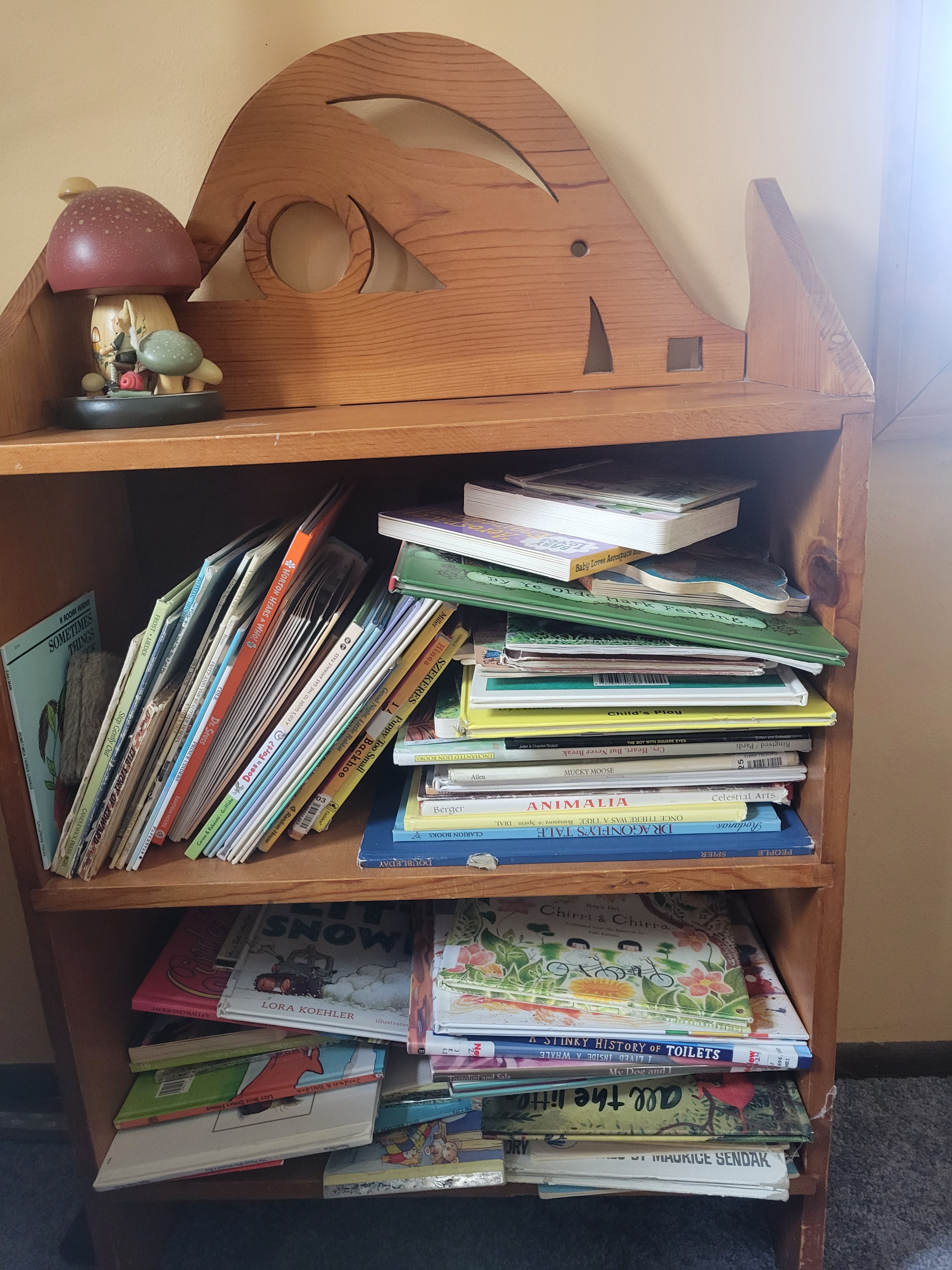
These shelves my sister designed and made have long been used to hold a gloriously messy assortment of kid books.

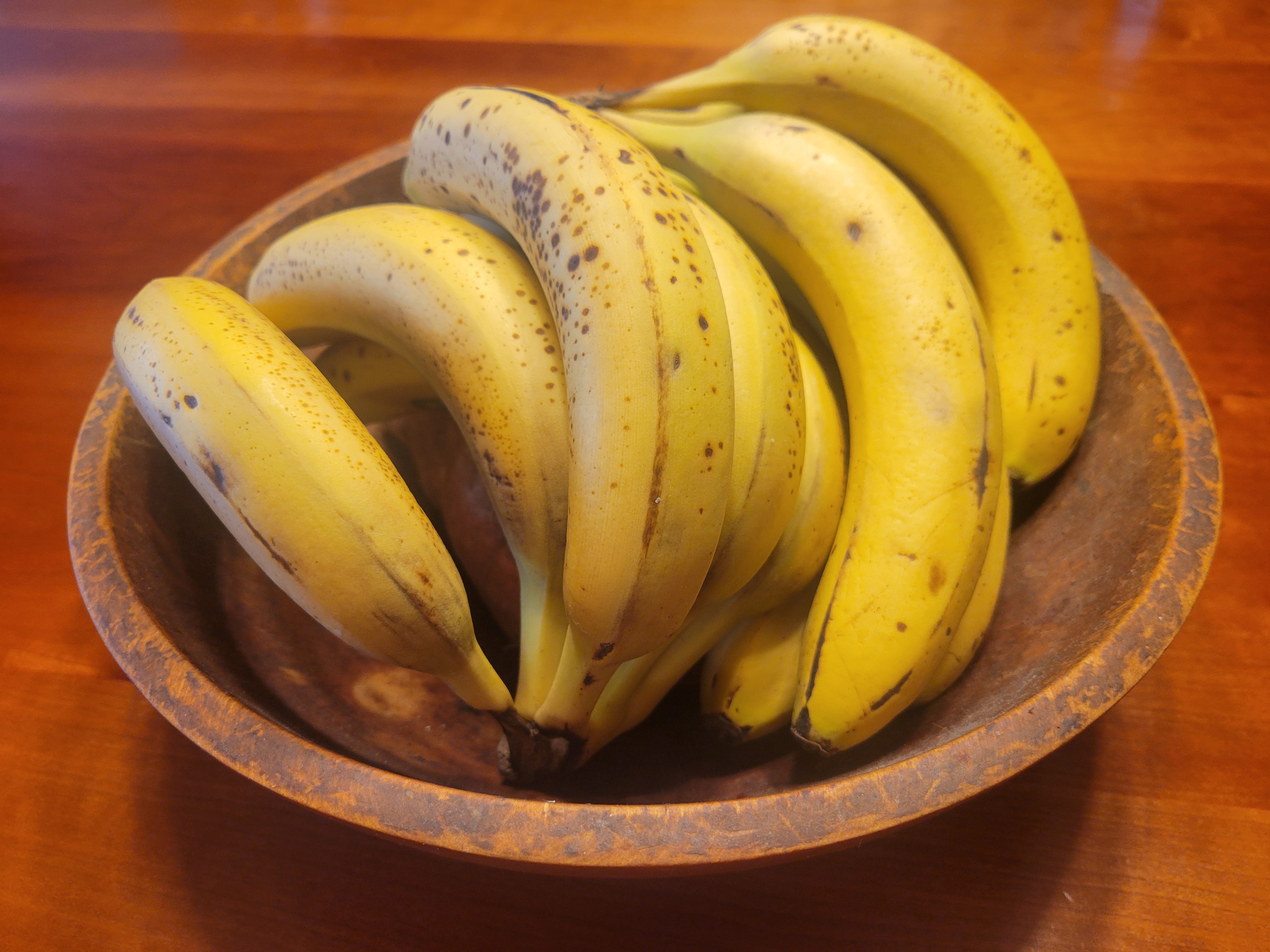
This ancient wooden bowl came to us from generations back. It has always held fruit on the counter.

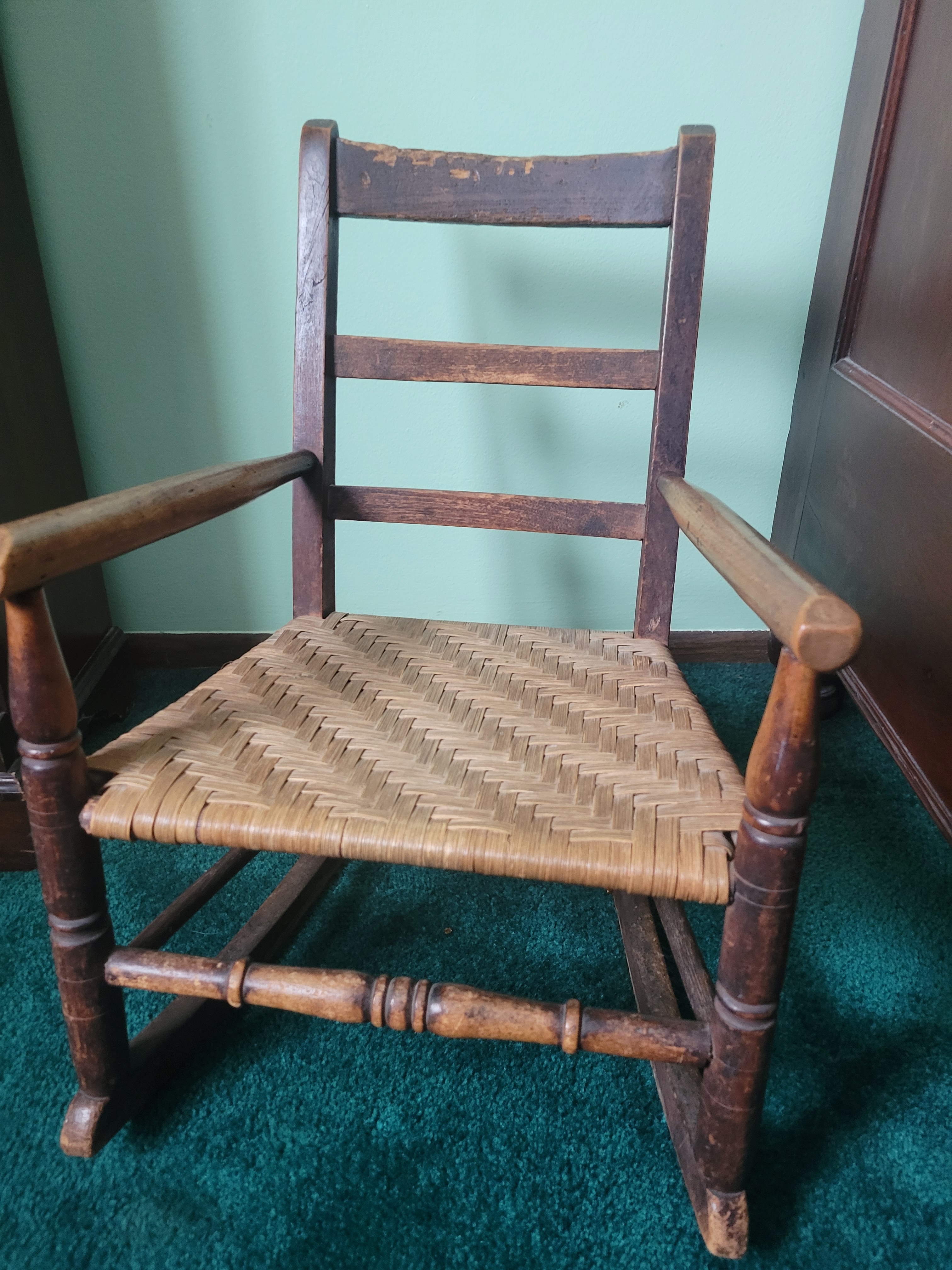
This is the tiny rocking chair my dad and his sibs rocked on, played with, and teethed on. It was used by countless cousins till it came to us.

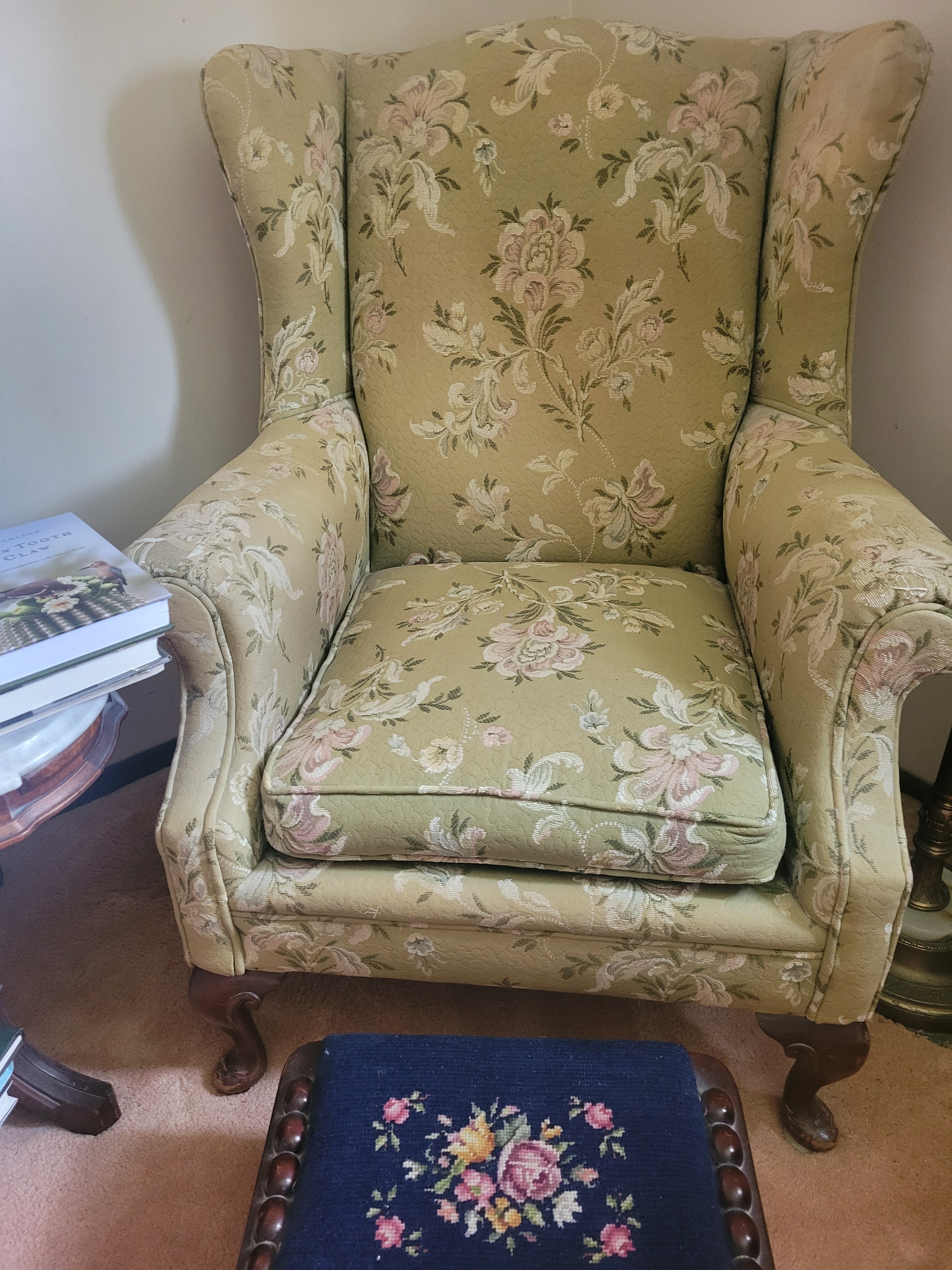
This admittedly worn but sturdy chair belonged to my Great-Aunt Mildred, which means it’s at least 70 or 80 years old. It probably needs to be recovered, but I don’t mind it as it is. Paired with a floor lamp from my parent’s home and footstool with crewel work by my grandmother and this corner of my bedroom is perfect for reading into the middle of the night when insomnia has me in its grip.

My husband made this substantial bathroom vanity from an old chest of drawers.

And art, oh art, every piece of art we have has a story. I’ll share only a few pics.

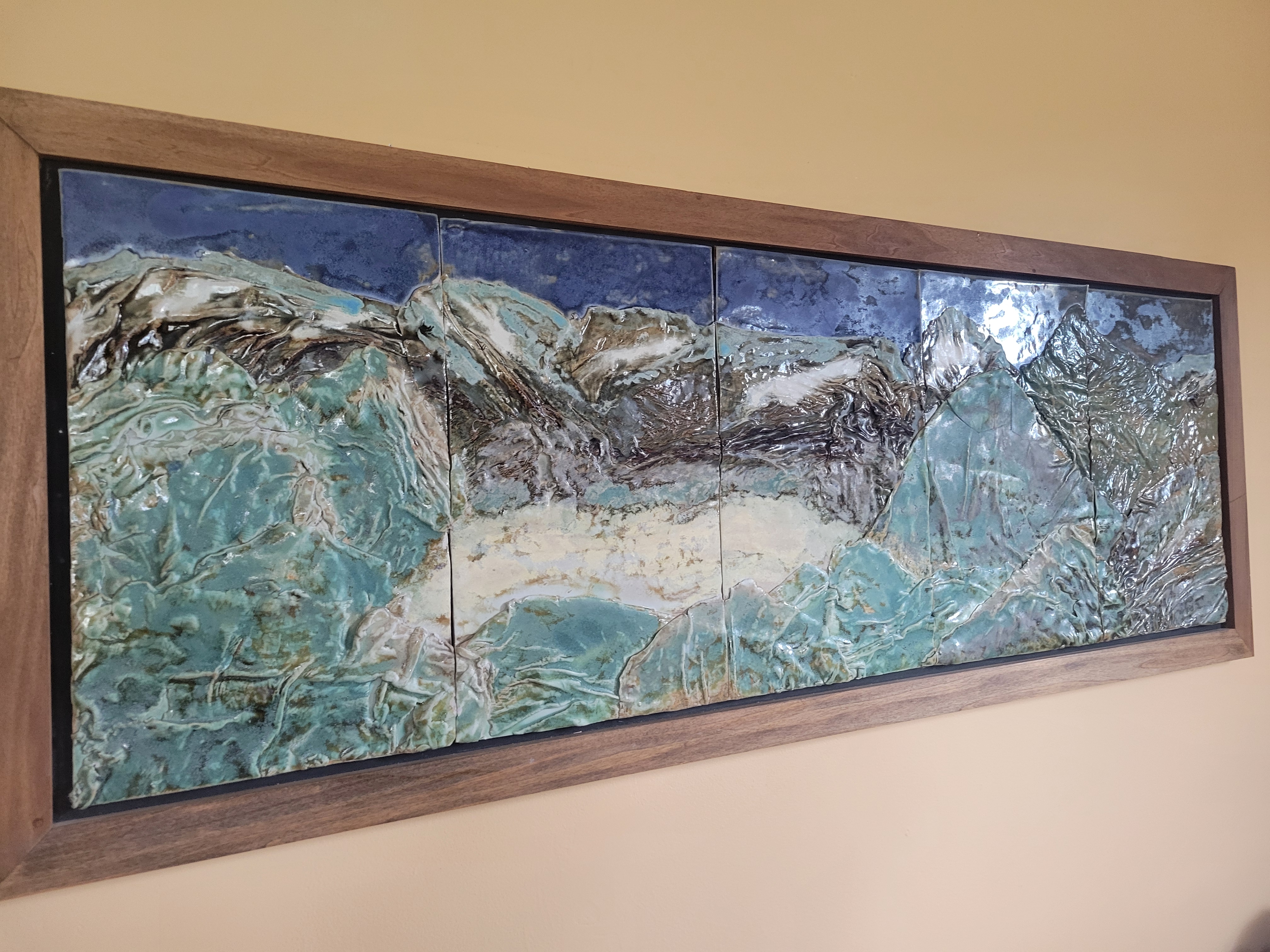
This gorgeous piece is by our friend, ceramics artist Stephen Bures. Years ago we put in our first and only claim on our homeowner’s insurance after our roof sustained storm damage. We bought this piece with the settlement and fixed the roof ourselves. #priorities

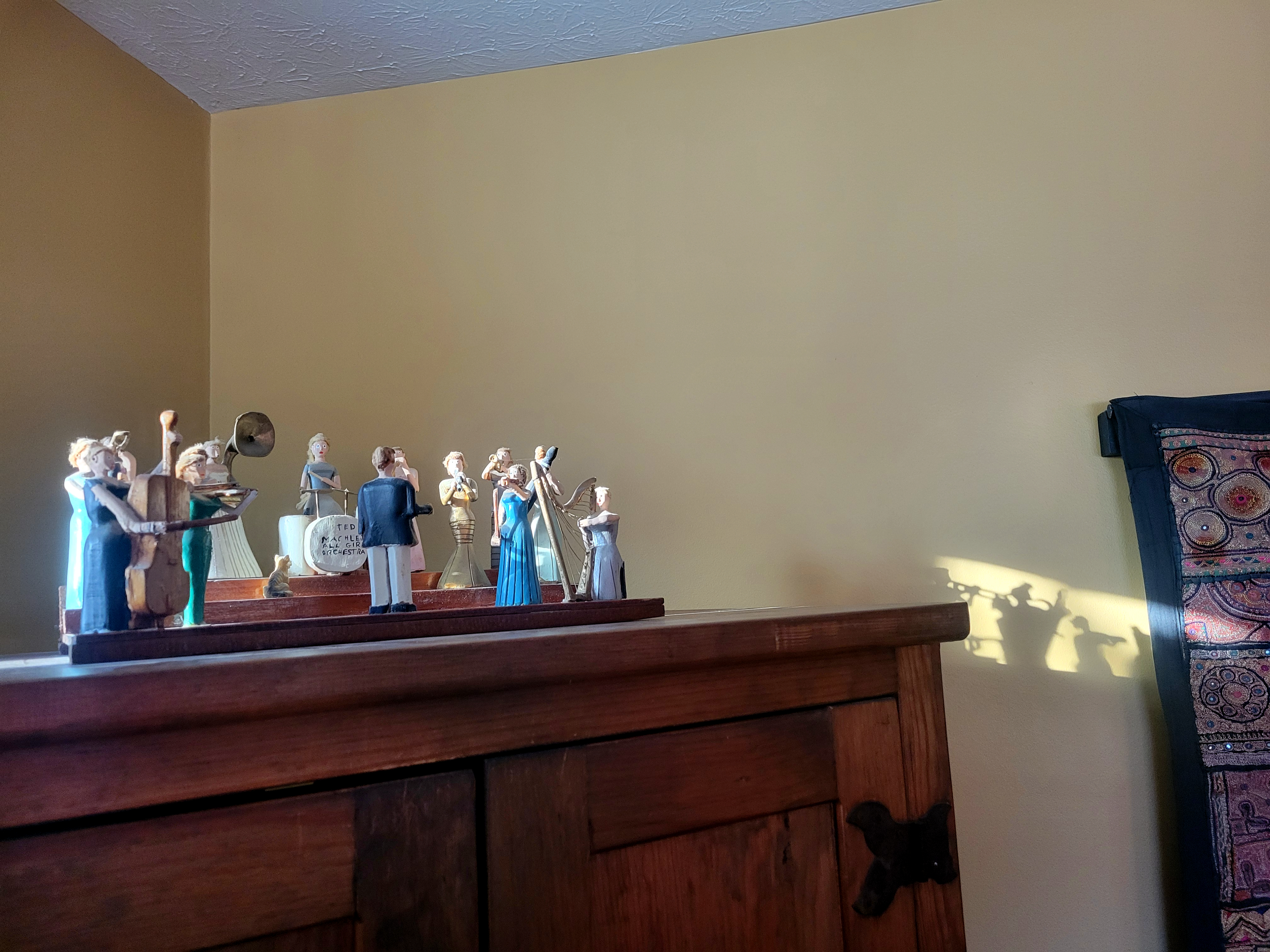
This unsigned work was made by a resident of the Medina County Home. He carved the figures from lumber cut-offs, used cotton left over from medication bottles for the hair, and painted it with materials from the home’s activities department. It’s a depiction of a music group his brother formed during the Great Depression. The drum reads TED MACHLES ALL-GIRL ORCHESTRA. He was tickled that we considered it art.

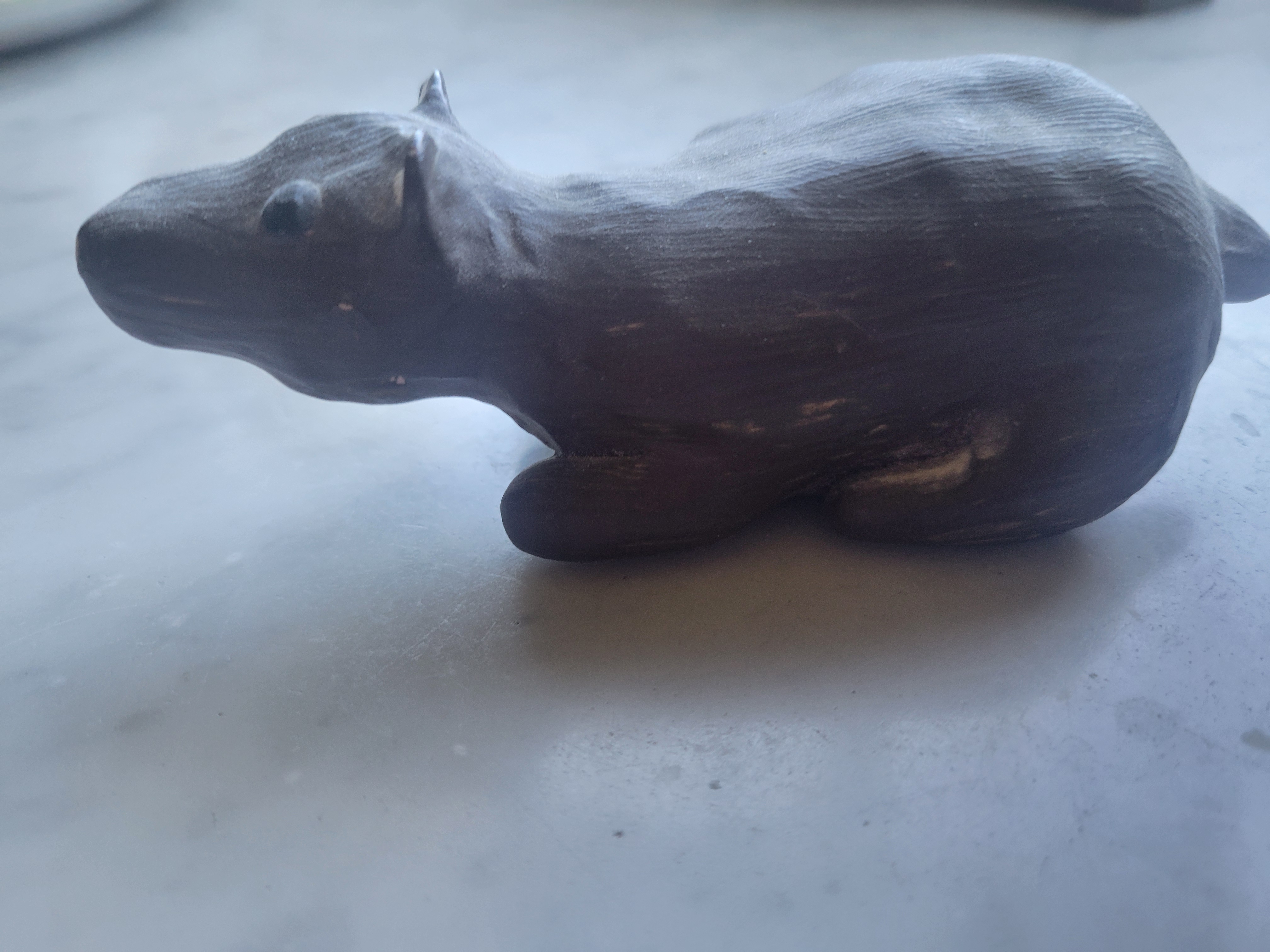
This sweet little wombat was made by my daughter when she was around 11 years old.

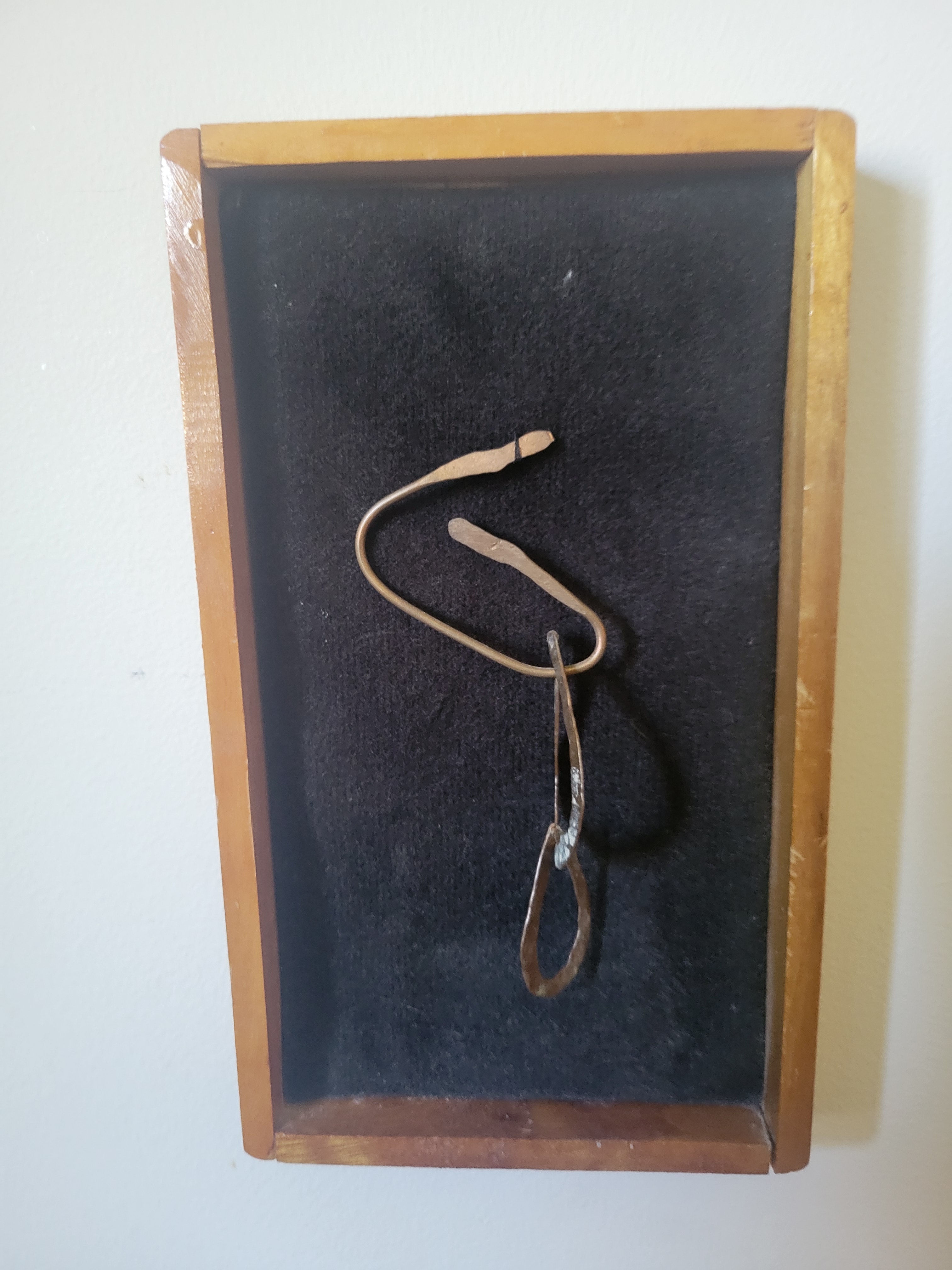
And this sculptural piece was made by my middle son when he was 8 or 9 by hammering and mounting copper wire. (I have a much more elaborate copper mobile he made hanging from the ceiling but I’m not photographing it due to its heavy decor of dust.)

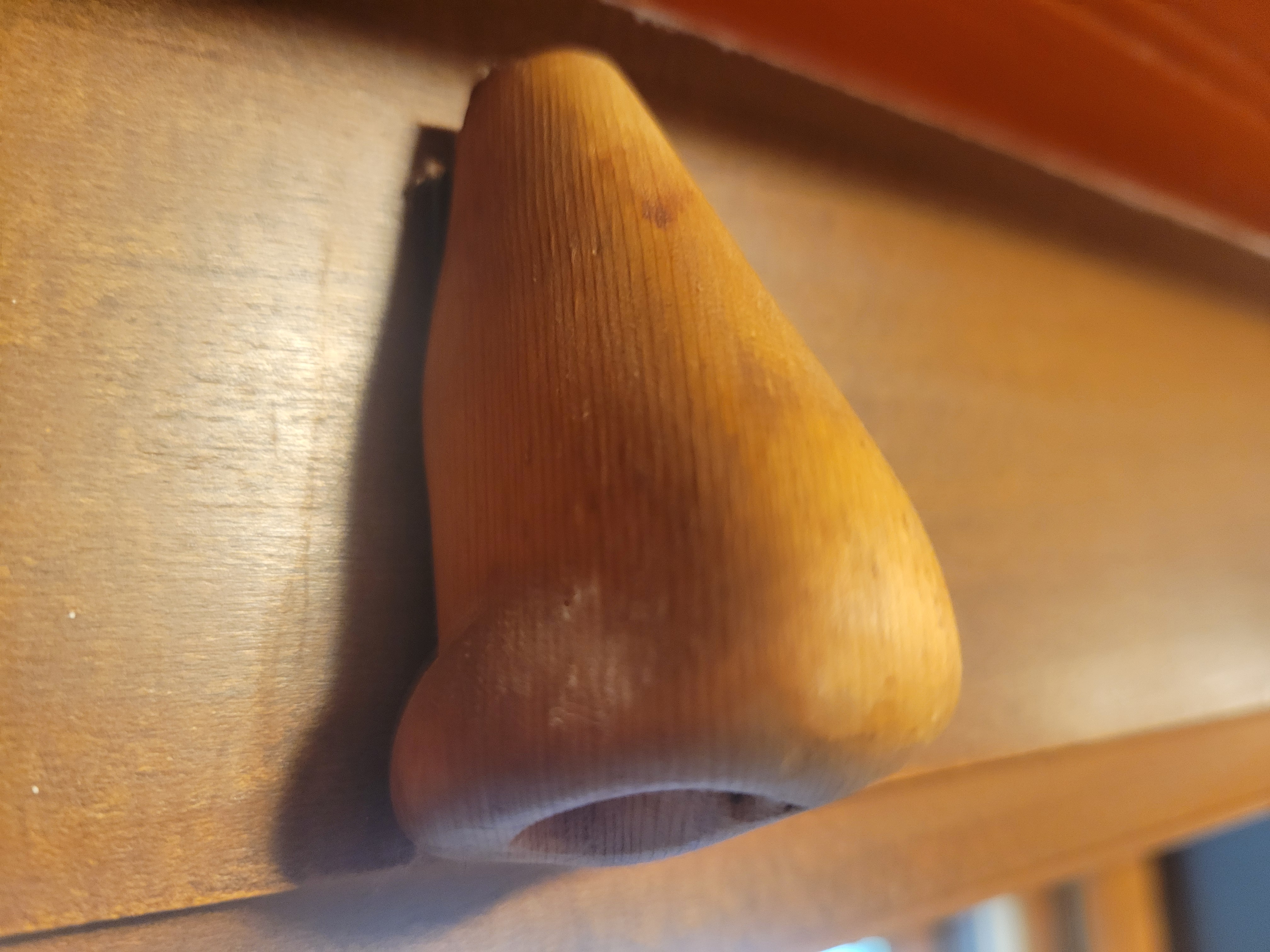
There’s too much to show you, but I’ll close by telling you about the spectacular nose at the start of this piece. It was carved by my brother when he was 13 or 14. It has always hung in my kitchen and is one of the things I’d save if there was a house fire.

In a world of crass materialism, appreciating what we have isn’t just about frugality or simplicity. It’s about quiet satisfaction found in meaning and memory. Things made with “wakened hands,” as D.H. Lawrence wrote, “are awake with transferred touch, and go on glowing for long years.”

Warm House On A Quiet Day, Disquieted

Today I’m making food for tomorrow’s family gathering. Cooking for people I cherish is a deep pleasure. I hope love transfers into the dough I knead, the sauces I stir, the spices I grind. Outside the rain is relentless, rain I wish came to us instead as the soft snow we might expect in February. But then, these are not normal times.  

I am in a warm house on a quiet day aware of the suffering in Yemen, Syria, Darfur, the Congo, and what clutches me most of late, Gaza. How is it possible the children I adore are safe when children just as beautiful and just as precious are exiled, starved, shot, bombed, buried under rubble? Many survivors are left with the world’s newest horrific acronym WCNSF: wounded child no surviving family. I know a moment’s trauma can take a lifetime to heal. I cannot imagine the relentless ongoing trauma for people in Gaza.

I am fortunate to host family Sundays here. Each week I plan out the day’s breakfast and lunch, making as many dishes as possible in advance so I can play with children and follow conversations on the day itself. This week I’m using beans I canned in September and the remaining potatoes harvested in October. I’m using pear sugar I made last summer and hot sauce I made last fall. I use eggs from our chickens, jam from our elderberries, tomatoes canned from our garden. There’s deep satisfaction in nourishing others with the food we’ve grown. Food, in nearly every spiritual tradition, is sacred and meant to be shared. Yet legacy olive groves are relentlessly bulldozed in Gaza. (Since 1967, more than eight hundred thousand Palestinian olive trees have been illegally uprooted by Israeli authorities and settlers.) Gaza’s orchards, greenhouses, crops, and fishing fleets are intentionally destroyed. And the nourishment lost, too, when libraries, universities, and museums are bombed into dust.  

One child suffering is too much. The news that over 12,660 Palestinian children have been killed and more than one million displaced from their homes is impossible to imagine. The suffering too, of the 36 Israeli children killed by Hamas and the child hostages Hamas still imprisons. Each number represents a whole person, as unique and amazing as a child you love, as the child you yourself once were.

This month I’m beginning to pull together the mess from a file marked “taxes.” I work for myself as a writer, book editor, and educator in what’s lightly called the “gig economy’ –a term that encompasses all of us who work without an employer paying our healthcare, social security, or any benefits at all. This means I fully fund my taxes. My taxes pay for the bombs dropping on Gaza. (As of last month a reported 65,000 tons of munitions) My taxes finance weapons used to shoot civilians fleeing an endangered hospital, wandering sheep, ambulance drivers, journalists, fathers seeking safe passage for their families.

Armed conflict and war massively increase profits for a whole slew of companies. In my country, courts have ruled that money is free speech and that corporations deserve some of the same rights as people.

My country has repeatedly been the lone vote against a ceasefire in this ongoing colonizer vs colonized struggle — a struggle that resounds down through the centuries into today as if we must replay our ancestors’ traumas until we finally wake up to our oneness on this beautiful endangered planet.

Not one of my sputtering letters to legislators, no vigil I’ve attended, no boycott I follow or money I donate makes a molecule’s worth of difference for the people who are right now being bombed in the places where they were told to seek refuge.

Tomorrow my children and their children will come to eat the food I’m making, to talk and laugh and relax together. This is a joy every family deserves, everywhere. More than a joy. It’s a right that none of us have the right to take away.

Spicy Story

My breakfast is invariably a mess of vegetables over brown rice or quinoa, topped with the spirited zing of fermented hot sauce. I’m pretty sure this hot sauce goes with everything. If my allergies would let me eat ice cream, I suspect it would enhance a hot fudge sundae too.

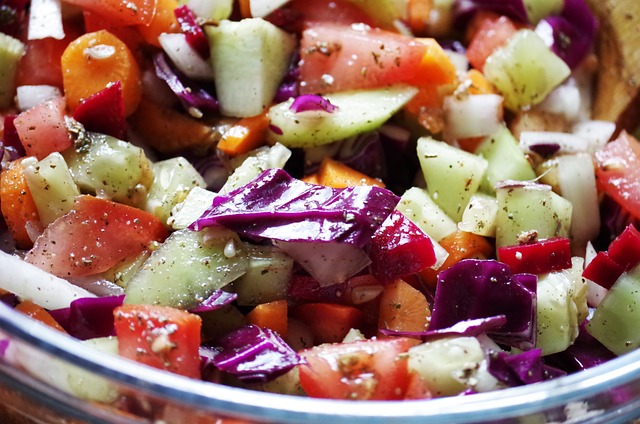
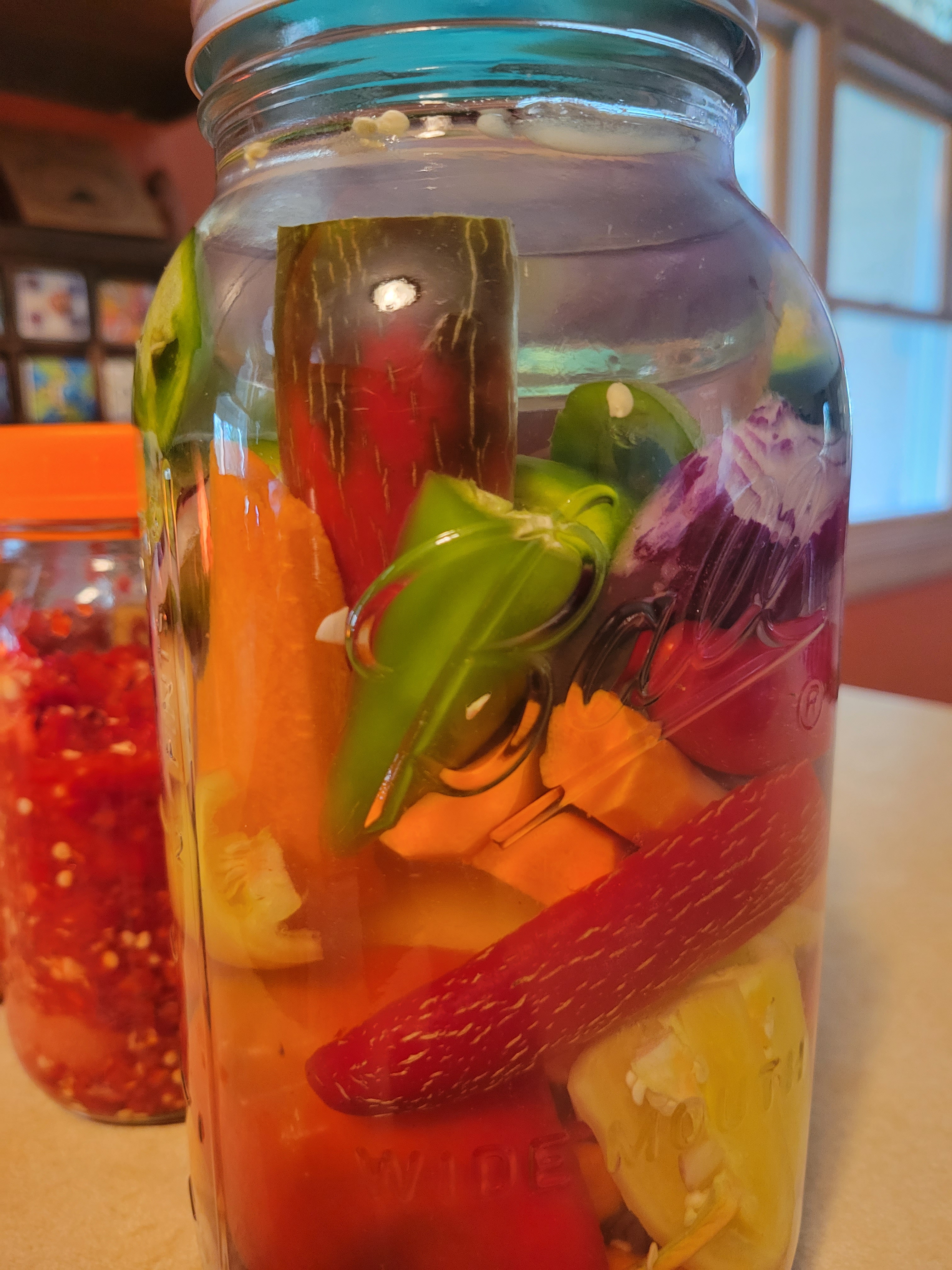
I make gallons of the stuff every year, starting in August and ending whenever the pepper harvest ends, usually early October. Each batch is different. (Here’s a general idea of the recipe.) I always use a variety of peppers from our gardens, along with carrot, garlic, maybe some onion, and whatever else I’m inspired to toss in. Some batches have a lot of heat, at least to my tongue. A single habanero in a half gallon jar is quite enough for me along with all the jalapenos, serrano, buena mulata, datil peppers and whatnot in there.
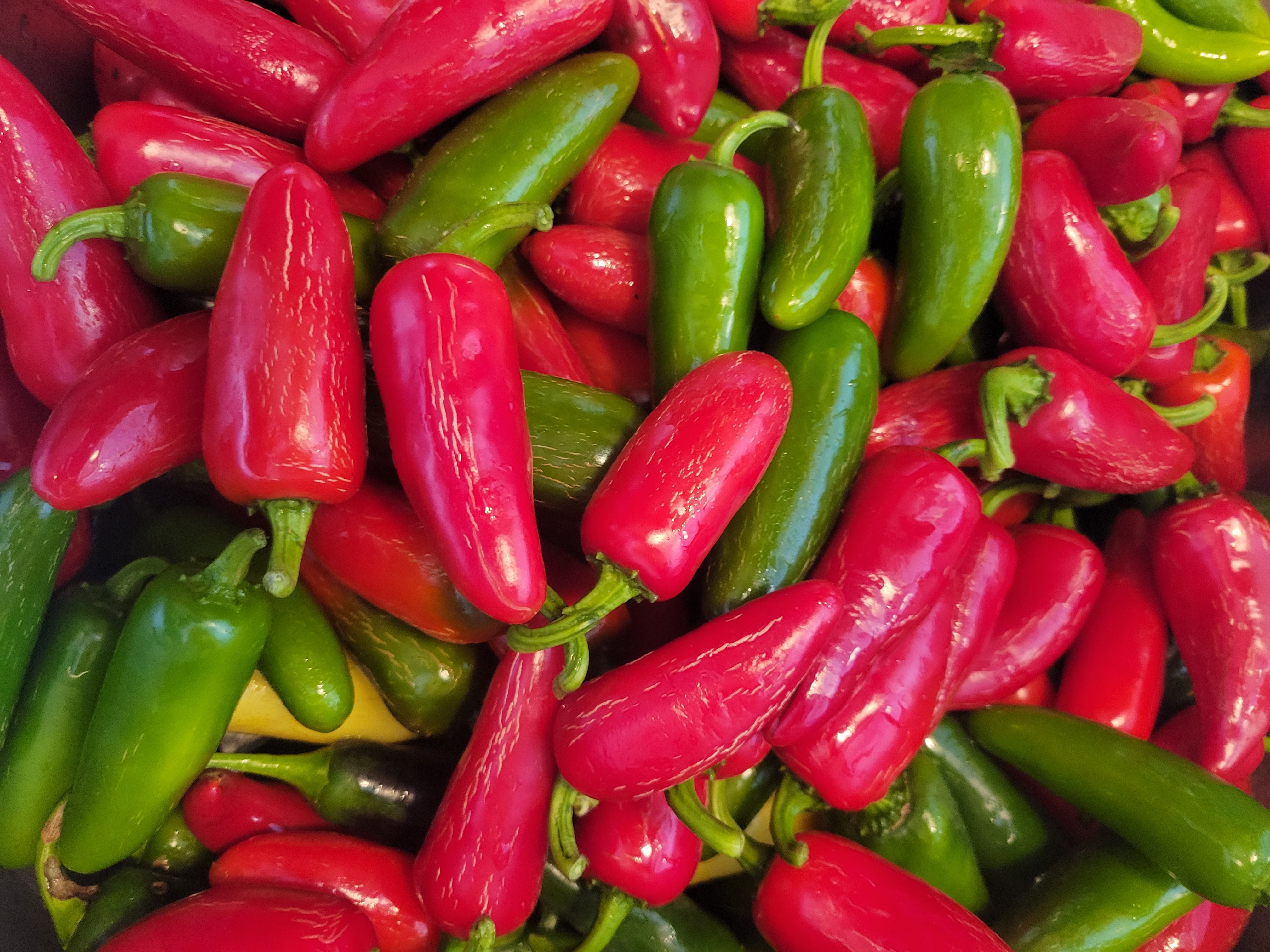
But this fall, after canning dozens of jars of salsa and more jars of zacusca, then freezing several large bags of peppers to use all winter, I realized we were close to the end of the pepper harvest. I only had one half gallon of hot sauce fermented. That wouldn’t last me more than a few months. My husband attempted to buy some from farm stands, but Amish farms and other local producers around here are more likely to grow sweet peppers. I called a few other places to see if I could get hot peppers in bulk. No luck. So in early October I put a plea out on our township’s Facebook page.

Our garden didn’t produce enough peppers this year for me to make our year’s supply of hot sauce. Crisis! Is anyone selling a peck basket or half bushel of jalapenos or other hot peppers?

Although I’ve lived in this rural township for a long time, I still feel like an outsider. So it was truly heartening to get responses from people who were happy to offer peppers. Some said to just come and pick them from their gardens. Some said they’d be glad to trade for any produce we had. In total, we ended up with well more than a half bushel of beautiful mixed hot peppers.

I even had enough to make a big batch of homemade siracha as well (in response to the Great Siracha Shortage).

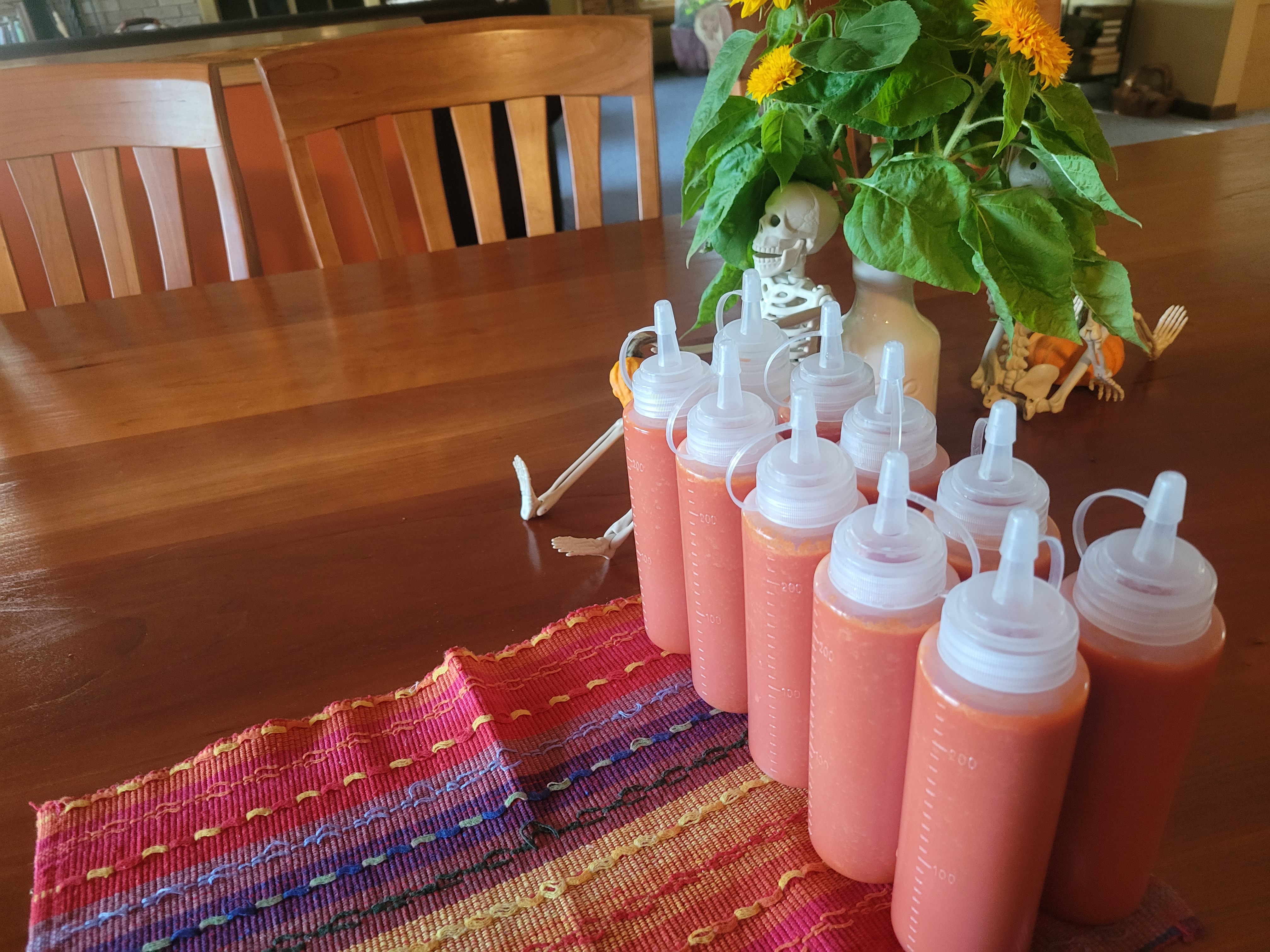
These are my giving away jars of sauce, from October.

And the fermented sauce I made? It’s SO good. Hot sauce made with these freely given peppers warms me more than any I’ve ever made. Kindness tastes restorative. It lingers on the tongue. I am SO grateful.

~

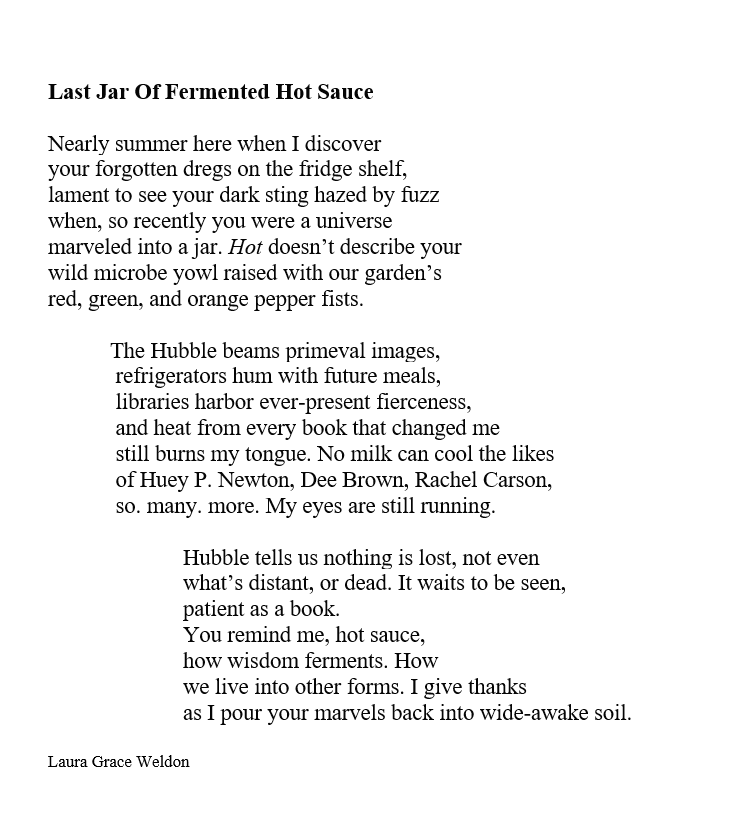
Here’s a poem I wrote to the last dregs of last year’s hot sauce, published in The MacGuffin.

Various Wonders 2023

What a year. I hope these last twelve months have been gentle on your health and kind to your peace of mind. I have much to say about all that’s going on, but I write my sputtering outrage and grief for the world in other places. In the spirit of sharing good things, here are some joys and wonders I’ve encountered in these last 12 months.

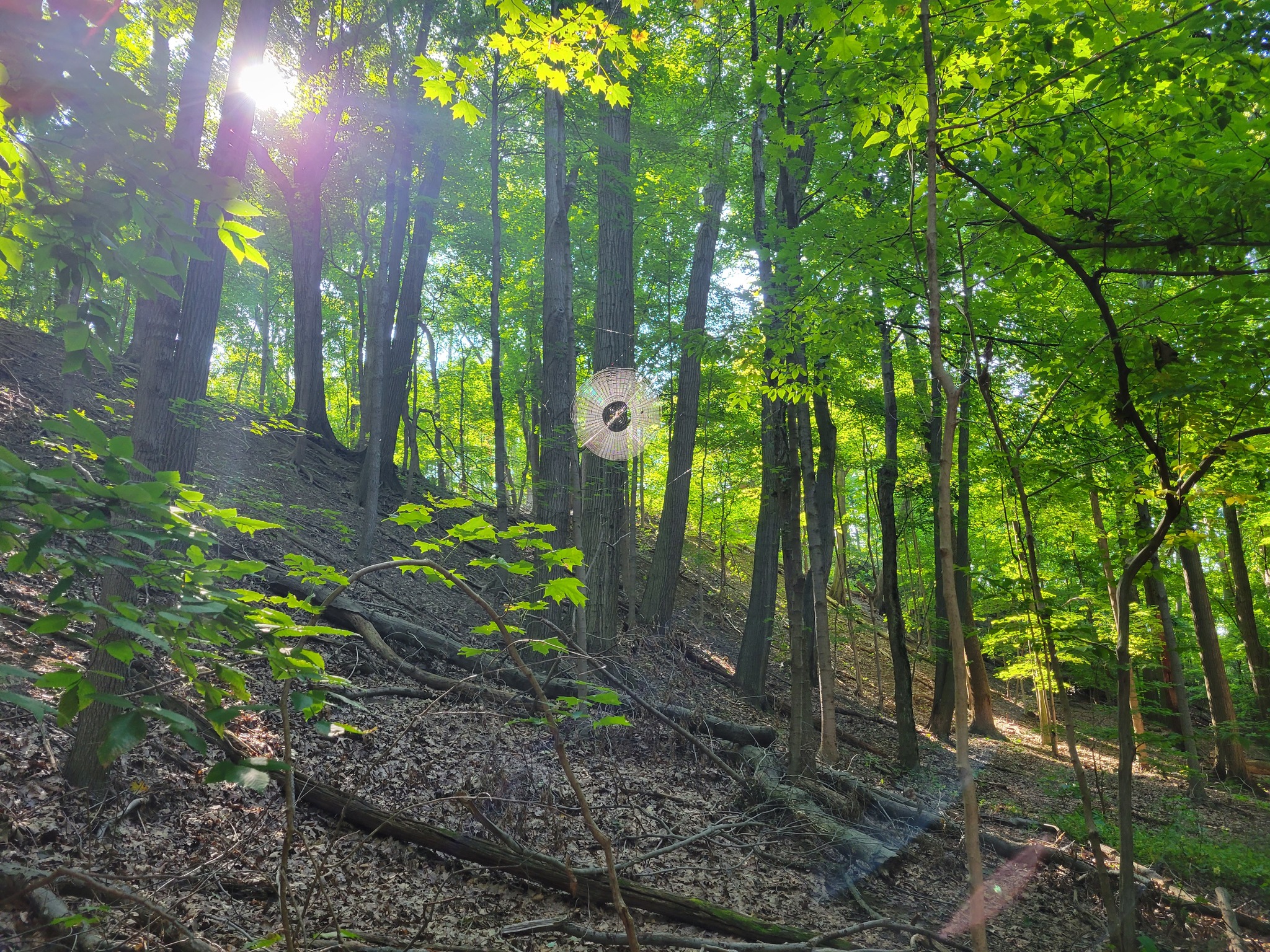
~Magical walks each week with people I love. (The picture, above, is from one such walk. No filters, I’m too lazy for photo fussing.)

~I savor our family Sundays with games and food and conversation and silliness and extra dogs and the people who willingly take leftovers home. I keep those who are missing from our gatherings in my heart.  

~I’m incredibly lucky people continue to put up with my ongoing covid restrictions. They agree to get together for a walk rather than out for coffee, hold meetings in the park or on a patio, take covid tests before coming to my house, and endure zoom rather than in-person classes.

~One of my life’s deepest joys come from teaching writing classes, particularly memoir classes.  It’s a privilege to witness the incredible connecting power of shared stories. At the close of each 6 or 8 week session of memoir classes I encourage writers to continue on as a group. I am thrilled so many have done so. One group of writers has been meeting 11 years, another for seven years, others are in their first few years of supporting one another’s writing.  

~My favorite job ever continues to be serving as editor of Braided Way: Faces & Voices of Spiritual Practice. It’s here on the web and here on Facebook. Here are this year’s nominees for writing awards:

Best of the Net
Pushcart
Best Spiritual Literature

~I also continue to work with wonderful writers as a book editor. I’m in the background, a sort of labor coach, as their new creations are readied to enter the world. Each birth is a thrill.

~It may seem odd to include this as a wonder, but our elder dog lived well into his 17th year. He continued to enjoy his food, his outings, and his snuggles right up to the end. Thank you for all our years together Cocoa Bean.

~I’m grateful to have poems and essays published this year. Several are in wonderful anthologies including The Wonder of Small Things: Poems of Peace & Renewal edited by James Crews and Poetry of Presence II: More Mindfulness Poems edited by Phyllis Cole-Dai and Ruby Wilson. Here are a few of the online offerings:

Last of the Honey” in The Inquisitive Eater

Ordinary Substance” in One Art

Oil Painting of a Tree-Lined Path” in Thimble

I sing the song the dishwasher makes mid-cycle” in The Shore

Carnival” in Gastropoda

Urgent” in Poetry Breakfast

Lollipop Epiphany” in Dorothy Parker’s Ashes

~So. Many. Good. Books. My goodness, I feel richer than any billionaire thanks to the wealth of library books available from Medina County District Library. Here are titles of a few of my very favorite reads this year. (I try to keep an up-to-date list on Goodreads, mostly to spare myself from forgetting titles I’ve already read.)  

Immersive and amazing nonfiction read this year includes:

Cosmogenesis: An Unveiling of the Expanding Universe by Brian Swimme 

Becoming Animal: An Earthly Cosmology by David Abram

Master Slave Husband Wife: An Epic Journey from Slavery to Freedom by Ilyon Woo

We Are The ARK: Returning our Gardens to Their True Nature Through Acts of Restorative Kindness by Mary Reynolds

Awe: The New Science of Everyday Wonder by Dacher Keltner

The Black Friend: On Being a Better White Person by Frederick Joseph

The Escape Artist: The Man Who Broke Out of Auschwitz To Warn the World by Jonathan Freedland

Light the Dark: Writers on Creativity, Inspiration, and the Artistic Process  edited by Joe Fassler

Take Back the Magic: Conversations with the Unseen World by Perdita Finn

Four Thousand Weeks: Time Management for Mortals by Oliver Burkeman

The School That Escaped the Nazis: The True Story of the Schoolteacher Who Defied Hitler by Deborah Cadbury

Life at the Edge of Sight: A Photographic Exploration of the Microbial World by Scott Chimileski

All the Ways Our Dead Still Speak: A Funeral Director on Life, Death, and the Hereafter by Caleb Wilde

The Green Boat: Reviving Ourselves in Our Capsized Culture by Mary Pipher

Play, Make, Create: A Process-Art Handbook by Meri Cherry

Bittersweet: How Sorrow and Longing Make Us Whole by Susan Cain

A Walking Life by Antonia Malchik

Immersive and amazing memoirs read this year include:

The Wild Boy by Paolo Cognetti

The Salt Path by Winn Raynor

Tasting the Sky: A Palestinian Childhood by Ibtisam Barakat

Balcony on the Moon: Coming of Age in Palestine by Ibtisam Barakat

A Place Called Home by David Ambroz

We Are Bridges by Cassandra Lane

Dreams of Trespass: Tales of a Harem Girlhood by Fatema Mernissi

You Could Make This Place Beautiful by Maggie Smith

How To Say Babylon by Safiya Sinclair

Colored People by Henry Louis Gates

Girl Factory by Karen Dietrich

A Childhood: The Biography of a Place by Harry Crews

Immersive and amazing novels read this year include:

Go As a River by Shelley Read

At Hawthorn Time  by Melissa Harrison

Cloud Cuckoo Land  by Anthony Doerr 

Evidence of Things Unseen by Marianne Wiggins

The Glass Chateau by Stephen Kiernan

Alchemy of a Blackbird by Claire McMillan

To Cook A Bear by Mikael Niemi

You Are Here by Karin Lin-Greenberg

Take What You Need by Idra Novey   

Now Is Not The Time To Panic by Kevin Wilson

The Storied Life of A.J. Filkry by Gabrielle Zevin

The Silver Star by Jeannette Walls

We The Animals by Justin Torres

Happiness Falls by Angie Kim  

The Vaster Wilds by Lauren Groff

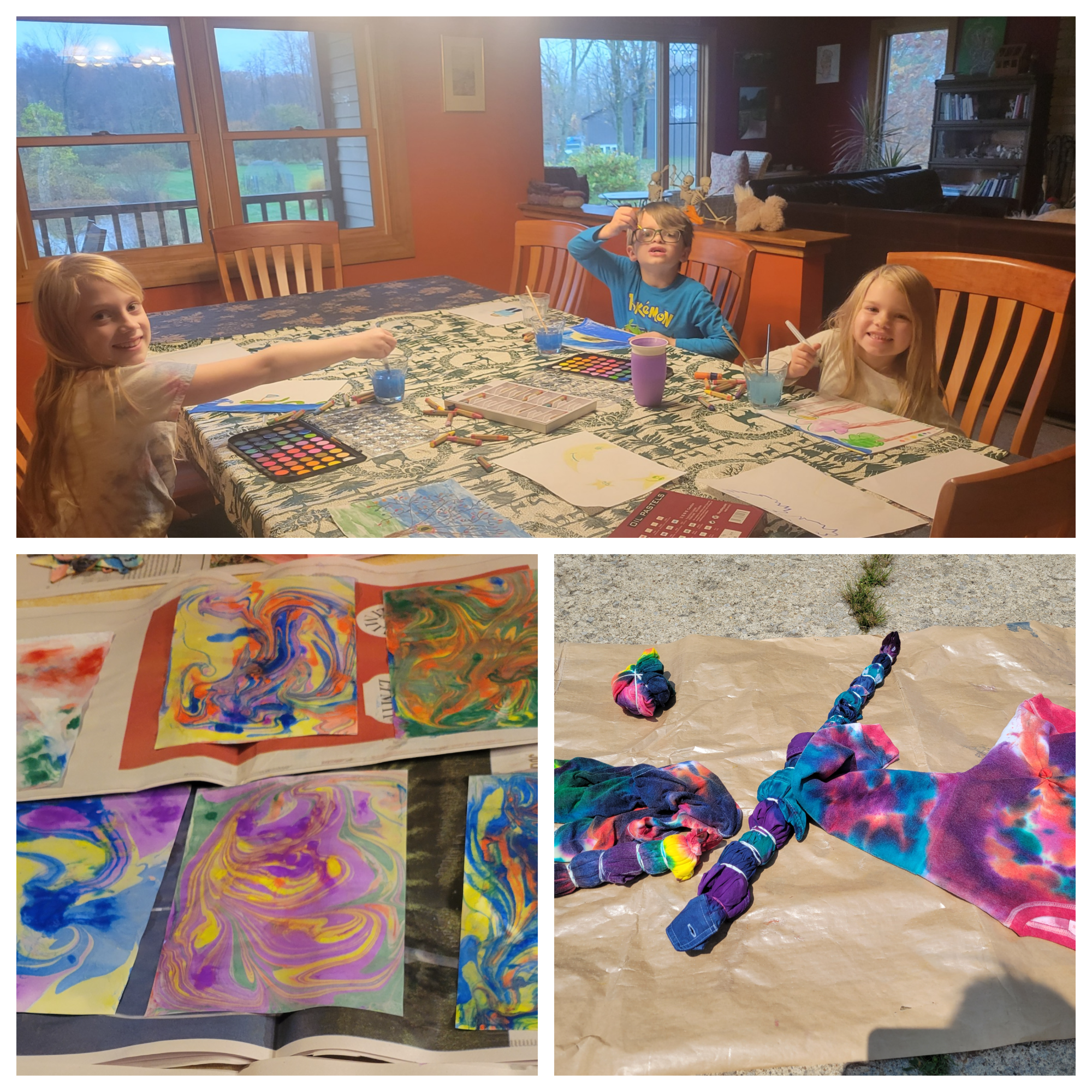
~We still aren’t back to the joys of hosting potlucks, house concerts, or art parties here. Damn covid again. But art with these co-collaborators is an immeasurable delight.

I hope 2024 brings you wonder, meaning, playfulness, and love. May this beautiful world of ours begin to heal.

Seeking Peace

I don’t know what to say or do in this current world of crisis. No vigil I’ve attended, none of the sputtering letters I’ve written to decision-makers, can stop the atrocities causing immense suffering at this moment. I feel even more disempowered recognizing that defense-related firms heavily influence US elections as well as foreign policy itself, weaponizing our tax dollars for their profit regardless of the toll. I contribute to reputable charities when I can, including Doctors Without Borders, Oxfam, and World Central Kitchen (as well as Move To Amend, which works to limit corporate influence in politics). I read about and sometimes write about structural change needed to grow a more just, regenerative, collaborative society. But mostly, I feel helpless.

Here are some peace-embodying reflections that help me in these times.

“The eyes of the future are looking back at us and they are praying for us to see beyond our own time. They are kneeling with hands clasped that we might act with restraint, that we might leave room for the life that is destined to come. To protect what is wild is to protect what is gentle. Perhaps the wilderness we fear is the pause between our own heartbeats, the silent space that says we live only by grace. Wilderness lives by this same grace. Wild mercy is in our hands.”   ~Terry Tempest Williams

~

“Did I offer peace today? Did I bring a smile to someone’s face? Did I say words of healing? Did I let go of my anger and resentment? Did I forgive? Did I love? There are the real questions. I must trust that the little bit of love that I sow now will bear many fruits, here in this world and the life to come.”      ~Henri Nouwen

~

“Here’s to the bridge-builders, the hand-holders, the light-bringers, those extraordinary souls wrapped in ordinary lives who quietly weave threads of humanity into an inhumane world. They are the unsung heroes in a world at war with itself. They are the whisperers of hope that peace is possible. Look for them in this present darkness. Light your candle with their flame. And then go. Build bridges. Hold hands. Bring light to a dark and desperate world. Be the hero you are looking for. Peace is possible. It begins with us.” ~L.R. Knost  

~

“Receive the light. When the darkness gathers around you, when you grow weary, when your soul aches for the peace of years gone by, when you are afraid we have lost the trail and are walking deeper into the woods: that is exactly the time you need to receive the light. Don’t hesitate. Don’t doubt that it is there for you. Don’t convince yourself that this darkness will be an endless night. It will not. Remember a lesson you learned in your own experience: It is when things are darkest that light shines most brightly. Even an ember at midnight holds the promise of the dawn to come. Receive the light. It will restore you. It will heal you. It will empower you to welcome a new day. And even if that day has its own struggles and tests, it will be lived in the light, where we can see one another, trust one another, and do what must be done to reconcile this moment to the history we are making. Do not be afraid. Receive the light.”      ~ Rt. Rev. Steven Charleston, Choctaw

~

“Our individual consciousness reflects the collective consciousness. Each of us can begin right now to practice calming our anger, looking deeply at the hatred and violence in our society and in our world. In this way, peace and understanding within the whole world is increased day by day. Developing the nectar of compassion in our own heart is the only effective spiritual response to hatred and violence.”     ~Thich Nhat Hanh

~

“In a time of destruction, create something. A poem. A parade. A community. A school. A vow. A moral principle. One peaceful moment.” ~Maxine Hong Kingston      

~

“The most valuable possession you can own is an open heart. The most powerful weapon you can be is an instrument of peace.”
~ Carlos Santana

~

“I swear I will not dishonor my soul with hatred, but offer myself humbly as a guardian of nature, as a healer of misery, as a messenger of wonder, as an architect of peace.”   ~Diane Ackerman

~

Bundled Together

“The purpose of listening across lines of difference is not agreement or compromise. It is understanding.” ~Valarie Kaur

The Bundle of Sticks is a perpetually useful fable passed down to us by Aesop. If you don’t remember it, here’s a quick retelling.

A father was distressed that his many sons were forever quarreling among themselves. No words he could say did the least good, even when he was nearing his final days. He cast about in his mind for an example that could show them the folly of their discord, until finally he happened upon an idea.  

He presented his sons with a bundle of sticks. Handing the bundle to each in turn, he asked them to break it. Although each one tried his best, none was able to do so.

Then the father untied the bundle and gave individual sticks to his sons. They broke them easily.

“My sons,” said the father, “do you see if you agree with each other and help each other, it will be impossible for your enemies to injure you? But if you are divided among yourselves, you will be no stronger than a single stick in that bundle.”

I thought about that fable today when I read a Facebook post by Kris Bordessa. She was a colleague of mine back when we both were senior editors for a Wired blog called GeekMom. Kris is smart, funny, resourceful, and deeply committed to practical solutions. She wrote a fantastic handbook called Attainable Sustainable: The Lost Art of Self-Reliant Living. (I’ve given quite a few copies as gifts.) Kris also offers a popular website and social media presence under the same name, both packed with entirely useful information. Here’s what she posted:

Let’s talk. I presume if you’re following me here, you’re interested in the idea of stepping with a lighter footprint on this earth. Making a difference, somehow, some way in how you eat or acquire things or spend your time. 

Can we acknowledge that this will look different for each of us? We are all at different stages, each taking baby steps to improve our self-reliance. My goal is to introduce you all to different possibilities. 

The man who called me “pathetic” for sharing a recipe with all-purpose flour? He didn’t get that. (Oh, I get messages, friends! 

You might think some of the recipes I share have too much sugar. That I shouldn’t share recipes with meat. Or dairy. Or that they are not “healthy enough.”

But think for a minute. If a family is used to buying, say, store-bought cookies (in a plastic clamshell container and filled with preservatives), making cookies at home – even if there is more sugar than you think is reasonable – is an improvement.  Maybe their *next step will be to make cookies with less sugar and whole wheat flour. If a family regularly dines out, counting on fast food or restaurants to fill their bellies, learning to cook meals at home is an improvement, even if the ingredients included might not pass muster in *your household. Others aren’t there yet, you know? 

Once upon a time, I relied on some of those “instant” boxes of rice. They were cheap, I was busy. Over the years, I decided that wasn’t for me. Because I’ve learned how to make my own, I won’t ever need to rely on those boxes again. One successful, small change. 

The beauty of this page is that you can take what you need, learn from it, improve yourself. Good, better, best. 

What’s one small change YOU’VE made in how you do things at home?

I get a lot of criticism on social media sites I manage too, especially the FB page I started back in 2010 when my book Free Range Learning came out. Most of the time it’s a supportive group, but whew, sometimes people turn on each other over things like how babies are raised (breast or bottle, responsive parenting or cry-it-out, full-time parent or employed parent), over how kids learn (public school, charter, homeschool, unschool, Montessori, Waldorf), over how they’re raised (screens or no screens, supervised activities vs free play). Lately there’s been significant pushback on my (admittedly regular) posts about the danger of book bans. I get very angry DMs accusing me of advocating for books that damage children. Really?

I get angry denunciations in response to articles I write too. Of course I’ve got a poem about this….

“Raising Children Tenderly” Article’s Online Comments     

You’re a spare-the-rod moron
writes blessedamny82.
How to raise whiney assholes
christernanplumbingsupply
posts three times in a row.
This crap makes me sick
complains finsterseventeen.  

Knee deep in
affection’s sacrifices,
I simply hold up a creased map
of my own wrong turns.
Got lost here. Crashed there.

We’re all souls
packed by glory into cells
for this short sojourn.
I don’t mean to offend
but chances are
I’ll do it again tomorrow. 

Angry accusations and finger-pointing takes place on a much larger scale. Those with the most money and the most power must delight in fomenting divisions between people who need each other. How can we head in regenerative environmental directions when advocates are pitted against each other about the wisest solutions? How can we bring forth the next generation of political leaders when they may have said or done something that doesn’t fit in the narrow definition of a movement’s ideology? Such “purity tests” are not helpful.

It’s disheartening to look at each day’s news. Worse, many of us are experiencing its effects— in the weather, on our health, in the collapse of once-trusted systems, and through injustices perpetrated on us or on people we love. We need each other. We need to listen, to care, to consider our planet’s fellow inhabitants in our decisions.

I particularly appreciate the way Kris gently told folks that they don’t need to be cast apart by a culture of individualism grown toxic, but can support each other. I love that her last line drew people back in, asking them to share a small change they’ve made that might inspire others. This is how we bundle ourselves back together. This is the way forward.

“The scarcest resource is not oil, metals, clean air, capital, labour, or technology. It is our willingness to listen to each other and learn from each other and to seek the truth rather than seek to be right.”
~Donella H. Meadows, environmental scientist and systems thinking educator